Cortisol is a major buzz word nowadays and many times the discussion of high cortisol is followed up with what cortisol reducing supplements should be taken. But before you reach for the next supplement, it is important that you are looking at the full picture. Chronic stress and elevated cortisol are frequently part of what is keeping their gut stagnant. In many cases, digestive symptoms improve significantly once we address the stress response alongside diet changes.

As a registered dietitian specializing in IBS and SIBO, I often get asked about the best cortisol reducing supplements. In this post, we will break down what cortisol actually does in the body. We will cover the supplements with real research behind them and if it is even necessary to take them. Lastly, we will cover the daily habits that are even more effective than any single pill.
This post contains affiliate links. If you make a purchase through one of these links, I may earn a small commission at no additional cost to you. I only recommend products I have researched and would genuinely suggest to my own clients.
What Cortisol Actually Does to Your Digestion
Cortisol is your body’s primary stress hormone. It is released through a communication loop between your brain and adrenal glands called the HPA axis. In short bursts, cortisol is helpful. It sharpens focus, mobilizes energy, and prepares your body to handle a real threat.
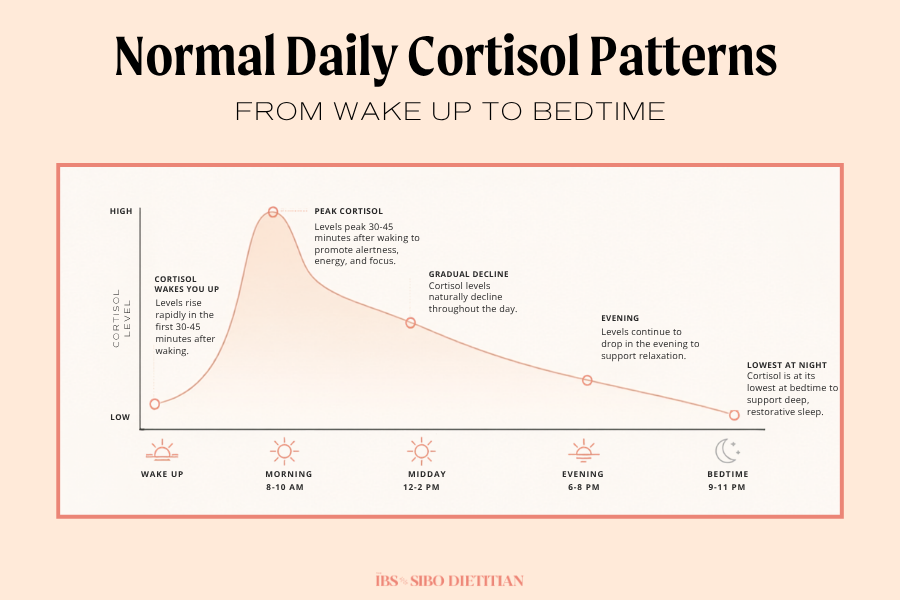
A healthy cortisol pattern follows a specific curve. Cortisol continues rising for the first 30 to 45 minutes after you wake up. It climbs by roughly 50 percent in what researchers call the cortisol awakening response (Fries, Dettenborn & Kirschbaum, International Journal of Psychophysiology, 2009). This morning surge is what helps you feel alert and ready to start the day.

Join the Free Masterclass
Learn the real reason SIBO and IBS symptoms keep coming back, and what's actually missing from most protocols. No cost, no commitment.
Register NowFrom there, cortisol should decline steadily through the afternoon and evening. It reaches its lowest point in the late evening and early night (O’Byrne, Yuen, Butt & Liu, Current Opinion in Endocrine and Metabolic Research, 2021). This dip is what allows your body to rest, digest, and repair overnight.
When you are chronically stress, cortisol stays elevated all day for weeks or months at a time, and digestion is one of the first systems to suffer. Your body prioritizes survival over motility, stomach acid production, and nervous system regulation. All of these play a role in conditions like SIBO and IBS (Margolis, Cryan & Mayer, Gastroenterology, 2021).
This is why simply taking a cortisol supplement, without addressing the underlying stressors in your life, often falls short. Supplements can absolutely help support a calmer stress response. But they work best as one part of a bigger picture. They are not a replacement for rest, boundaries, and nervous system regulation.
Cortisol Reducing Supplements Worth Reaching For
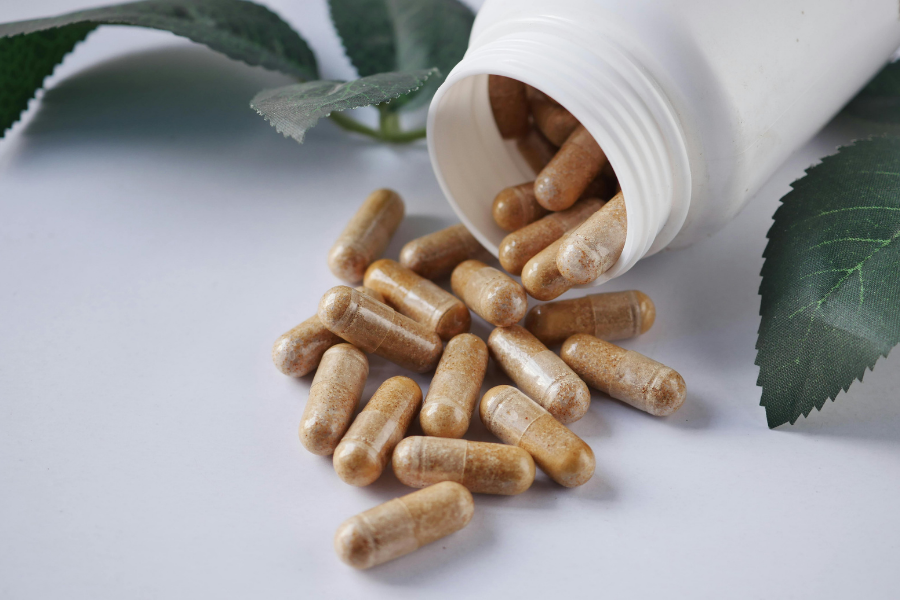
Not every product marketed as a cortisol reducing supplement holds up under research. The four below are the ones with real clinical trials behind them. Researchers tested each one at a specific dose and timeline that measurably lowered cortisol or stress markers.
- Magnesium Glycinate (such as Thorne Magnesium Bisglycinate or Pure Encapsulations Magnesium Glycinate): Low magnesium levels are linked to a more exaggerated cortisol response to stress. A randomized trial found that magnesium combined with vitamin B6 significantly reduced stress scores in adults over eight weeks (Pouteau et al., PLOS ONE, 2018). Most studies use doses around 300 milligrams of magnesium daily, taken with food.
- Ashwagandha (standardized to KSM-66 or Sensoril extract, such as Pure Encapsulations or Protocol for Life Balance KSM-66 Ashwagandha): A 2024 meta-analysis of 15 randomized controlled trials found that ashwagandha significantly reduced cortisol levels after eight weeks of use (Arumugam et al., Explore, 2024). Studied doses generally range from 300 to 600 milligrams daily.
- L-Theanine (such as NOW Foods L-Theanine with Suntheanine): In a randomized, placebo controlled trial, a 200 milligram dose reduced the salivary cortisol response to a stressful task. This effect was measurable within a few hours (White et al., Nutrients, 2016). It is generally well tolerated and can be taken any time of day.
- Omega-3 Fish Oil (such as Nordic Naturals Ultimate Omega): In a randomized, placebo controlled trial, omega-3 supplementation reduced basal cortisol levels and perceived stress over three weeks (Barbadoro et al., Molecular Nutrition & Food Research, 2013). Look for a product that provides at least one gram of combined EPA and DHA daily.

Supplements Often Promoted for Cortisol but Often Backfire
Cortisol is a very popular topic in the wellness industry. Unfortunately, popularity comes along with increased marketing. This means that there are going to be a lot of products that claim to fix your cortisol and heal your gut, without the research to back it up. Here are some red flags to pay attention to when choosing a “cortisol calming” supplement.
- High dose adrenal glandular supplements: These are marketed as a way to support tired adrenal glands. The concept of adrenal fatigue is not well supported by current research, and these products are inconsistently regulated. A systematic review found no scientific evidence that adrenal fatigue exists as a diagnosable condition (Cadegiani & Kater, BMC Endocrine Disorders, 2016).
- Proprietary cortisol blend powders with no listed doses: Many of these products hide their ingredient amounts behind a proprietary blend label. This makes it impossible to know if you are getting a clinically studied dose of anything. It also makes it hard to know if a dose is high enough to cause unwanted side effects.
- Stimulant based energy and focus supplements: Ironically, some products marketed for stress also contain caffeine or other stimulants. These can further activate the stress response rather than calming it. Research shows caffeine raises cortisol output during a mental stress task. This works directly against the calming effect these products claim to offer (Vincent et al., Pharmacology Biochemistry and Behavior, 2006).
- Extremely high dose ashwagandha products: More is not always better. Doses far beyond what has been studied have been linked to liver related concerns in rare case reports. In one published case, a woman developed liver injury within weeks of starting ashwagandha. Her liver enzymes normalized months after she stopped taking it (Tóth et al., Clinical Case Reports, 2023). Staying within researched dosing ranges is the safer approach.
How to Approach Cortisol Without Supplements
Before you reach for the supplements though, it is important that you realize that you can’t out-supplement a lifestyle that keeps your body stuck in fight or flight. Magnesium and ashwagandha can support a calmer response, but they work quietly in the background. The habits below are what change the signal your body receives every day.
- Sleep: Poor sleep is one of the strongest drivers of elevated morning cortisol, which is why consistent sleep is foundational. Restricting sleep for even a week raises evening cortisol levels (Spiegel, Leproult & Van Cauter, The Lancet, 1999).
- Natural Light: Natural light upon wakening can ensure that the cortisol wakening response is strong and you start the day with energy and alert. (Fries, Dettenborn & Kirschbaum, International Journal of Psychophysiology, 2009)
- Balanced meals: Skipping meals can itself raise cortisol and worsen digestive symptoms. Regular, balanced meals play a bigger role in a calm stress response than most people expect.
- Short breaks: Short breaks during the day, rather than pushing through constant multitasking, give your nervous system room to reset.
- Vagus nerve support: Vagus nerve supportive habits, like slow breathing before meals, can help shift your body out of fight or flight before you even eat.
- Mineral repletion: Chronic stress often depletes key minerals, which can further compound fatigue and digestive symptoms.
Conclusion
If you are dealing with digestive symptoms that flare alongside your stress levels, do not just reach for a supplement and call it done. Cortisol reducing supplements work best as part of a bigger picture. They support a nervous system that is also getting rest, consistent meals, and genuine recovery time. This often requires a more comprehensive approach focused on nervous system regulation and daily habits. A bottle of magnesium or ashwagandha cannot undo months or years of chronic stress on its own.
Frequently Asked Questions
Can supplements alone lower my cortisol levels?
Supplements can help support a calmer stress response. Several, like magnesium and ashwagandha, have research showing they can meaningfully reduce cortisol levels. However, supplements work best when they are paired with changes to sleep, meal timing, and daily stress load. Relying on a supplement alone, while continuing to live in a highly stressful and under rested environment, usually leads to disappointing results.
How long does it take for cortisol supplements to work?
Most of the research on magnesium and ashwagandha shows measurable changes in cortisol after about four to eight weeks of consistent use. This is why I usually encourage clients to commit to a supplement for at least two months. It is important to give it a fair trial rather than expecting an immediate shift after a few days.
Is high cortisol always the cause of digestive symptoms?
Not always, but it is frequently an overlooked piece of the puzzle. Chronic stress and elevated cortisol can slow motility and reduce stomach acid production. They can also disrupt the balance of bacteria in the gut. On the surface, this can look identical to other digestive issues. This is why I always encourage looking at the full picture, including stress and nervous system regulation, rather than assuming digestive symptoms are only about food.
Are cortisol reducing supplements safe to take long term?
Many of the supplements discussed here, including magnesium and L-theanine, have a strong long term safety profile at studied doses. Ashwagandha is generally well tolerated, but should be used cautiously by anyone with thyroid conditions or autoimmune disease. It can affect thyroid hormone levels and has not been thoroughly studied in pregnancy. Always talk to your doctor or dietitian before starting a new supplement, especially if you take other medications.