Peptides such as BPC 157 have gone from a niche research to a full-blown wellness trend. Social media promises faster gut healing, calmer inflammation, and relief from stubborn bloating. If you have been dealing with digestive symptoms for a long time, that promise is easy to want to believe.
As a registered dietitian specializing in IBS and SIBO, recently I have received this question often: can BPC 157 heal the gut? This post covers what BPC 157 is, what the research shows, and where the evidence stops. I will also explain what I look at first when symptoms will not resolve.What Is BPC 157?
What Is a Peptide?
A peptide is a short chain of amino acids, the same building blocks that make up protein. Peptide bonds link the amino acids together, which is where the name comes from. Scientists generally call a chain of about 2 to 50 amino acids a peptide. Longer chains fold into complex shapes and become proteins.
Your body makes thousands of peptides, and many of them work as messengers. A peptide travels to a cell, binds to a receptor, and tells that cell what to do. Your gut relies heavily on these messengers to time digestion before, during, and between meals. Here are three examples.
- Motilin: Triggers the migrating motor complex, the cleaning wave that sweeps the small intestine between meals.
- Cholecystokinin (CCK): Tells your gallbladder to release bile and your pancreas to release digestive enzymes after a meal.
- Ghrelin: Signals hunger and also helps stimulate gut motility.
Peptides also show up in medicine. Linaclotide (Linzess), an FDA-approved prescription for IBS with constipation, is a 14 amino acid peptide. Semaglutide (Ozempic) is a peptide too. Collagen peptides are a food supplement that your digestive system breaks down into amino acids and small fragments.

Join the Free Masterclass
Learn the real reason SIBO and IBS symptoms keep coming back, and what's actually missing from most protocols. No cost, no commitment.
Register NowStomach acid and digestive enzymes break most peptides apart quickly, which is why many peptide medications come as injections. Some peptides though like Linzess works differently because it acts directly on the intestinal lining, and very little of it reaches the bloodstream.
A peptide’s effects depend on its exact sequence, its dose, and how it reaches its target. Only testing in people can show whether those effects are safe and useful. Keep that in mind as we look at BPC 157.
What Is BPC 157?
Where It Comes From
BPC stands for Body Protection Compound. In the early 1990s, a research group in Croatia described a larger protein in human gastric juice that seemed to protect the stomach lining, and they named it BPC. BPC 157 is a lab-made peptide that copies a 15 amino acid section of that protein (Sikiric et al., Current Pharmaceutical Design, 2011).
That stomach origin explains why people so often connect BPC 157 to expedited gut healing. The same researchers also report that it stays stable in stomach acid, which breaks down most peptides. That stability is why many people take it by mouth for gut issues.
How People Use It
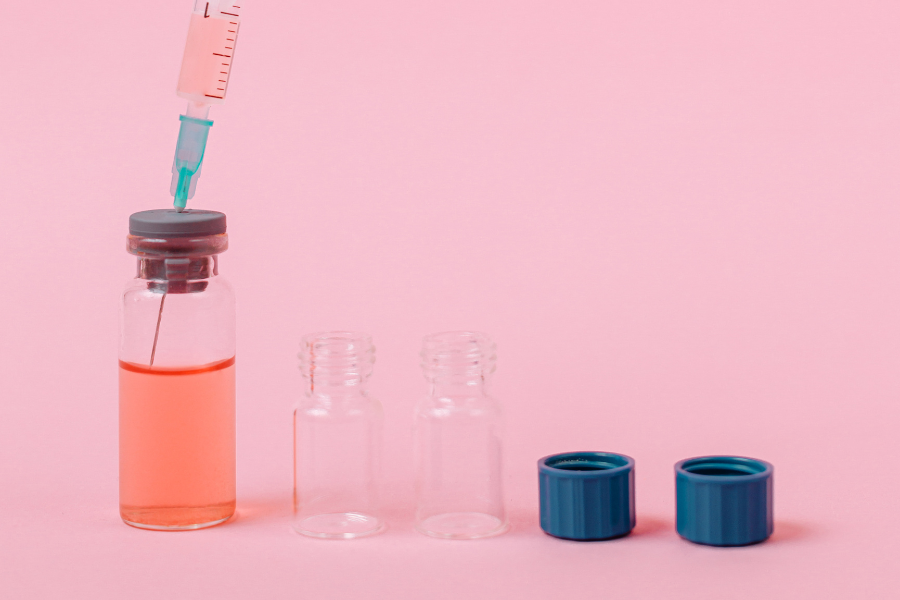
Most BPC 157 sold today comes as an injection that people give themselves under the skin. Some companies also sell capsules, tablets, and nasal sprays. Doses vary widely because no one has established a safe or effective dose in humans.
How It Might Work
The proposed mechanisms come mostly from animal work (Singh and Pino, Pharmacy Times, 2026). Researchers think BPC 157 may:
- Grow new blood vessels: More blood flow brings oxygen and nutrients to damaged tissue.
- Calm inflammation: Fewer inflammatory signals give tissue a better chance to repair.
- Influence nitric oxide: Your body uses this gas as a messenger to widen blood vessels and relax gut muscle.
In the gut, the theory is that more blood flow and less inflammation could help an injured intestinal lining repair itself.
The blood vessel effect though, also raises a safety question. Tumors need new blood vessels to grow, so researchers worry that a compound that builds blood vessels could also help abnormal tissue grow. No study has shown this happens with BPC 157, but no long term human studies exist to rule it out.
Its Legal Status
The FDA has not approved it as a drug. BPC 157 carries a Category 2 restriction from the FDA for bulk drug substances used in compounding. The World Anti-Doping Agency has also prohibited it since 2022 (Singh and Pino, Pharmacy Times, 2026). Many online sellers label it a “research chemical,” which means no one guarantees its purity or dose.
What the Research Actually Shows
Animal Studies
Most of the gut research on BPC 157 comes from rats. Researchers injure part of the digestive tract on purpose, give BPC 157 in drinking water or by injection, and then measure how well the tissue heals. Across these studies, the treated rats often healed faster and more completely (Sikiric et al., Current Pharmaceutical Design, 2011).
- Stomach damage from NSAIDs and alcohol: BPC 157 reduced stomach lesions from drugs like aspirin, indomethacin, and diclofenac, and it protected the stomach from alcohol damage.
- Colitis and ulcers: Rats with induced colon inflammation and ulcers showed faster healing of the gut lining.
- Fistulas and surgical connections: BPC 157 helped close abnormal tunnels between the gut and the skin, and it improved healing where surgeons reconnected sections of bowel.
- Short bowel syndrome: After surgeons removed a large section of intestine, treated rats regained weight and grew taller villi, the finger-like projections that absorb nutrients.
- Sphincter function: In rats with esophagitis, BPC 157 restored pressure in the lower esophageal sphincter and the pyloric sphincter at the bottom of the stomach.
The same research group reports that BPC 157 stays stable in human gastric juice. That stability explains why people take it by mouth for gut issues, even though stomach acid breaks down most peptides.
Where the Animal Research Falls Short
- The models start with an injury: Every model above begins with a wound, an ulcer, or a surgical cut. IBS and SIBO usually involve hypersensitivity, slow motility, or bacterial overgrowth with no open wound in the lining.
- One lab dominates the field: A single research group at the University of Zagreb in Croatia produced most of these studies, and independent labs have rarely repeated the work.
- Rats differ from people: Rat doses, healing speed, and gut anatomy do not map neatly onto humans.
- The early human trials went quiet: The developers describe ulcerative colitis trials from the early 2000s, but full results never appeared in a peer-reviewed journal.
Human Studies
The human data is very thin. A 2025 systematic review of BPC 157 in orthopaedic sports medicine found 36 studies. Thirty five were preclinical, and one was a retrospective review of 12 patients. The authors reported finding no clinical safety data (Vasireddi et al., HSS Journal, 2025).
A small pilot study in 12 women with interstitial cystitis reported symptom relief and no adverse events (Lee et al., Alternative Therapies in Health and Medicine, 2024). It had no control group. Across the field, researchers have reported only three uncontrolled pilot studies with about 30 participants in total (Singh and Pino, Pharmacy Times, 2026).
None of these human studies looked at IBS or SIBO.
Why Gut Symptoms Often Need a Different Approach
Most people with IBS or SIBO do not have a gut injury that needs a repair signal. Their gut is hypersensitive, slow, or carrying an overgrowth of bacteria. IBS involves visceral hypersensitivity, where normal gas and stretch register as pain (Barbara et al., Gastroenterology, 2004). A healing peptide does not address that.
SIBO usually has an upstream cause. The cleaning wave of the small intestine, called the migrating motor complex, may be sluggish. Stomach acid may be low. There may be past food poisoning, adhesions, or a medication effect. If those drivers stay in place, symptoms return no matter what you add on top.
Stress is a big factor as well. Your vagus nerve helps coordinate motility and digestive secretions. When the nervous system stays in a stressed state, digestion slows. This is why I treat gut symptoms as a systems problem, not a single missing ingredient.
What to Address Before Trying the BPC 157 Peptide
Gut healing rarely comes down to one fix. Digestion depends on motility, stomach acid, the microbiome, the gut lining, and the nervous system working together, so symptoms usually have more than one driver. That is why there is no fast track to healing. Lasting progress comes from working through each layer in the right order.
- Confirm what you are treating: Ask your provider about testing for SIBO, H. pylori, and other causes rather than guessing.
- Look for the root cause: Review motility, stomach acid, medications, and past infections.
- Build a structured food plan: A short, guided low FODMAP phase can help you learn your triggers without staying restricted.
- Support the nervous system: Gentle daily practices that calm the stress response can improve digestion over time.
- Check your foundations: Sleep, meal spacing, hydration, and minerals like magnesium all affect gut function.
- Work with a team: A GI dietitian and a gastroenterologist can build a plan that fits your history.
If You Are Still Considering BPC 157
If you are still interested in trying peptides, whether it is BPC 157 or another, here is what I would want you to consider first.
- Skip “research chemical” sites: The FDA has not approved BPC 157, so legitimate access means a prescription and a compounding pharmacy. Online sellers have no quality control, and you cannot verify what is in the vial.
- Know that safety data is missing: Long term effects and drug interactions are unknown.
- Check sports rules: The World Anti-Doping Agency prohibits it.
- Fix the cause before adding products: Stacking supplements rarely replaces root cause work.
- Look past testimonials: Personal stories are not the same as controlled trials.
- Keep food and stress in the plan: These are often the fastest levers for symptom relief.
Bottom Line
BPC 157 is an interesting compound with promising animal research. But the human evidence is extremely thin, and the safety data is missing. For most people with IBS or SIBO, the better first step is to find out why the gut is struggling. When we address motility, digestion, food triggers, and the nervous system, the gut often has much less to repair.
Frequently Asked Questions
Does BPC 157 heal the gut?
Animal studies link it to better healing in models of gut injury. Human evidence is extremely thin, and no trials have tested it in IBS or SIBO. Calling it a proven gut healer goes beyond the evidence.
Is BPC 157 safe?
We do not know. A 2025 systematic review found no clinical safety data. Reports of mild injection site reactions exist, and long term effects are unknown. Because no agency regulates these products, contamination is also a concern.
Is BPC 157 legal?
The FDA has not approved it. The FDA restricts it for compounding under Category 2, and the World Anti-Doping Agency prohibits it. Rules can change, so check current guidance with a pharmacist or prescriber.
Can BPC 157 help with SIBO or IBS?
There is no human research showing that it does. SIBO and IBS usually involve motility, sensitivity, and overgrowth, which need a root cause approach. Treating those drivers is where I would start.
What should I do instead if my gut is not healing?
Start with testing and a review of root causes such as motility, stomach acid, and stress. Add a structured food plan and nervous system support. A registered dietitian can help you sort out what to do first.
More on the Blog
SIBO vs. IBS: What Is the Difference?
What Is SIBO? Understanding Why SIBO Happens and Steps to Get Rid of It