Digestion is one of the first things that I help optimize with my clients, and bitter herbs are my favorite tool to do so. If you are struggling with digestion it will often present as feeling full after just a few bites, or bloated an hour into a meal. Many have been told their digestion is “just sensitive” and left with little else to go on. Real digestion starts before food ever hits your plate. For most people, that early trigger is missing entirely, and everything downstream pays for it.

As a Registered Dietitian specializing in IBS and SIBO, I often get asked about bitter herbs for digestion. Many wonder if they are actually worth the hype. In this post, we will cover why digestion depends on stomach acid, enzymes, and bile, and what bitters actually do inside the body. We will also cover the individual herbs behind most bitters formulas, which ones are worth trying, and who should use caution.
This post contains affiliate links. If you make a purchase through one of these links, I may earn a small commission at no additional cost to you. I only recommend products I have researched and would genuinely suggest to my own clients.
Why Digestion Needs Stomach Acid, Enzymes, and Bile
Every meal depends on three things working together to breakdown food before nutrients are absorbed into your bloodstream. Stomach acid breaks down protein and activates the enzyme pepsin. It also creates an environment that is hostile to bacteria that would otherwise overgrow in the small intestine. Enzymes from the pancreas finish breaking down carbohydrates, fats, and protein into pieces small enough to absorb. Bile from the liver, stored in the gallbladder, emulsifies fat so those same enzymes can actually reach it (Patricia and Dhamoon, StatPearls, 2022).
When any one of these pieces are not running efficiently, digestion slows down and becomes less effective. Food sits longer in the stomach, undigested particles reach the small intestine, and bacteria ferment what your body could not break down on its own. This is often what shows up as fullness after a few bites, bloating an hour into a meal, or the sense that food just is not moving the way it should.

Join the Free Masterclass
Learn the real reason SIBO and IBS symptoms keep coming back, and what's actually missing from most protocols. No cost, no commitment.
Register NowWhat Bitter Herbs Are Actually Doing in Your Body
Bitter herbs or foods contain components that support digestion, starting before the first bite ever reaches your stomach. Some examples of bitter foods are plants like arugula, gentian, dandelion root, ginger and artichoke leaf. Their defining feature is an intensely bitter taste. That bitterness is not just a flavor note, but also a signal to your body to get digestion going.
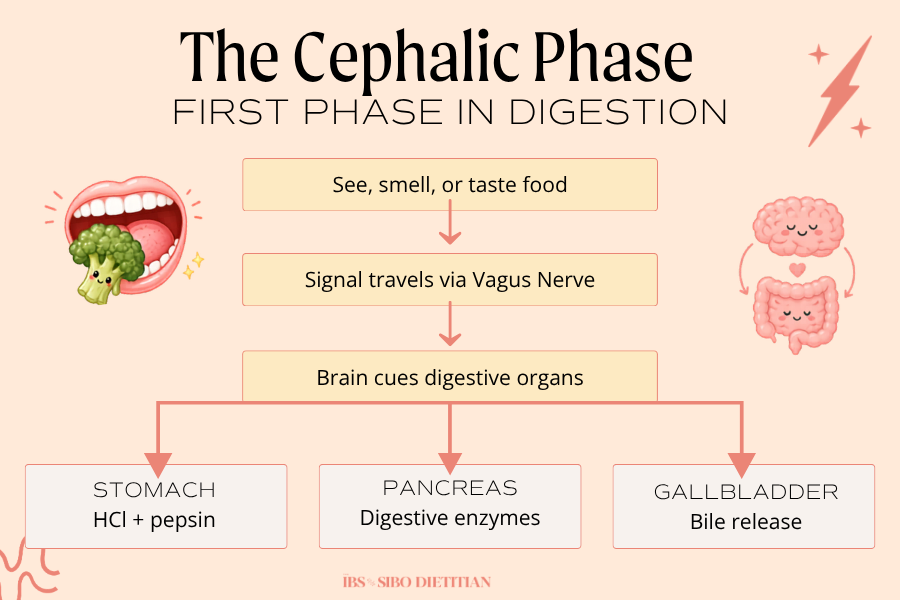
When bitter compounds hit taste receptors on the tongue, they trigger something called the cephalic phase of digestion. This is a reflex response carried through the vagus nerve to the stomach (McMullen et al., Journal of Ethnopharmacology, 2014). This same bitter sensing does not stop at the tongue though. Bitter taste receptors also line the gut itself. There, they help regulate digestive hormone release and gut motility (Sternini and Rozengurt, Nature Reviews Gastroenterology & Hepatology, 2024). Digestive secretions are not automatic. They depend heavily on cues your body picks up before, and while, you eat.
Common Bitter Herbs and What They Do
Most bitter tincture formulas you see commercially are built from the same handful of herbs, just in different ratios. Here is what each one is actually doing.
Gentian Root
Gentian root contains secoiridoid compounds, including amarogentin, one of the most intensely bitter substances known. Human studies show it stimulates gastric juice secretion and speeds gallbladder emptying within minutes of tasting it (ESCOP, Gentianae Radix Monograph). This is why it shows up in nearly every combination bitters formula on the market.
Artichoke Leaf
Artichoke leaf has the strongest clinical backing of any bitter herb for functional dyspepsia symptoms. This includes early fullness, bloating, and upper abdominal discomfort (Holtmann et al., Alimentary Pharmacology & Therapeutics, 2003). It works partly through its bitter taste and partly through cynarin, a compound that stimulates bile production directly in the liver. That dual mechanism makes it a strong standalone option for anyone whose main complaint is heaviness after fatty meals.
Dandelion Root
Dandelion root is one of the more research-backed choleretics, meaning it directly increases how much bile the liver produces. Animal studies found bile output increased by roughly a third to 40 percent after dandelion extract administration (Schütz et al., Journal of Ethnopharmacology, 2006). For clients whose digestion slows down specifically around fat, dandelion root is often the herb doing the most work inside a blended formula.
Ginger
Ginger works differently than the other herbs on this list. It is only mildly bitter, but it speeds gastric emptying and strengthens stomach contractions. A randomized, double-blind study found gastric half-emptying time dropped from about 16 minutes to about 12 minutes after taking ginger (Wu et al., European Journal of Gastroenterology & Hepatology, 2008). This is helpful for anyone whose main complaint is a heavy, slow-to-empty stomach rather than low stomach acid itself.
Orange Peel
Orange peel shows up in most blended bitters formulas as a supporting player rather than the main event. On its own, it is a milder bitter than gentian or dandelion. Its role is to round out the taste and add a mild carminative effect that settles gas and cramping alongside the stronger bitters it is paired with.
Bitter Herbs Worth Reaching For
These four formulas each combine several of the herbs above, so you are getting layered support rather than relying on a single bitter compound.
- Vitanica Bitters Tonic, Vanilla Orange: built around gentian and dandelion root, with fennel seed and orange peel rounding out the taste. A gentle, alcohol-free entry point for anyone new to bitters.
- Dr. Shade’s BitterX: a concentrated blend of dandelion, gentian, solidago, and myrrh. Suits anyone who wants a fast-acting, higher-potency option.
- Gaia Herbs Digestive Bitters with Turmeric: combines gentian, dandelion, and ginger with turmeric and milk thistle for broader liver support alongside digestion.
- Dr. Mercola Organic Digestive Bitters: an alcohol-free formula built around gentian, dandelion, and ginger, sweetened naturally with citrus rather than added sugar.
I put all four of these into a digestive bitters protocol on my Fullscript store, so you can compare them side by side and order directly, and with a 15% discount.
How to Actually Use Bitter Herbs
How you take bitters affects whether they actually do their job. It is important to note that timing, dose, and form make the difference between a formula that works and one that just tastes bad.
- Take bitters 10 to 15 minutes before a meal, not during or after. This gives the cephalic response time to prepare your stomach.
- Start with a small dose, such as a few drops or a quarter teaspoon, and increase slowly based on tolerance.
- Choose a liquid tincture or spray over a capsule when possible. Taste on the tongue is part of how bitters work so effectively.
- Avoid bitters within a few hours of bed if you also deal with reflux. Anything that stimulates gastric acid may aggravate symptoms late at night.
Who Should Be Cautious With Bitters
Bitters are generally well tolerated, but stimulating stomach acid and bile is not the right move for every digestive system.
If you have an active gastric or duodenal ulcer, bitters can aggravate the irritation you are already dealing with. They signal the increase of acid production, so a stomach lining that needs to heal will not benefit from the stimulation. The same caution applies to gallstones or any bile duct obstruction. Bitters increase bile flow, which can trigger discomfort in someone whose bile is not draining normally.
Pregnant individuals should also use caution. Several bitter herbs, along with the alcohol base many liquid bitters are made with, are not well studied in pregnancy. Talk to your provider first, and look for an alcohol-free formula if you decide to move forward. If you take medications, particularly anything affecting stomach acid or bile flow, check for interactions before starting. As with any botanical, starting low and watching how your body responds is the safer approach.
Other Ways to Support Digestion Alongside Bitters
Bitters work best as one piece of a bigger digestion picture, not a stand-alone fix. A few habits make a real difference alongside them.
Slow Down at Meals
Digestion works best when you are sitting down, not eating on the move, at your desk, or in the car. Just the act of enjoying a meal and salivating can kickstart that cephalic phase of digestion.
Eat Without Distraction
Scrolling your phone or watching TV pulls attention away from your meal, which blunts the same cephalic response bitters are designed to trigger. Be present in the meal and focus on the smell and taste of the meals.
Chew Thoroughly
Aim to break food down to an applesauce-like consistency before swallowing. Typically I recommend around 20 bites of your food. This takes real mechanical strain off your stomach and lets your enzymes do their job more efficiently.
Take a Few Slow Belly Breaths Before Eating
Belly or diaphragmatic breathing is an amazing tool to use before a meal. This type of breathing shifts your nervous system out of “fight or flight” and into the “rest and digest” state digestion depends on.
Go Easy on Fluid With Meals
Large amounts of liquid can dilute stomach acid right when you need it working at full strength. Having fluid with meals is not inherently bad but if you are chugging tons of water in a meal, digestion can suffer.
All this to say, bitters can jumpstart the process, but these habits are what let your body sustain it without leaning on a supplement forever.
Frequently Asked Questions
Do bitter herbs actually help with bloating?
Bitter herbs are not a direct treatment for bloating itself. They can support the digestive steps that come before it. Bitters stimulate saliva, stomach acid, and bile through the cephalic phase of digestion. That may help food break down more completely and move through the stomach more efficiently. For some people, that translates into less bloating after meals, especially if sluggish digestion was part of the underlying issue. Bitters are unlikely to help much if bloating is being driven by something else entirely. SIBO and food intolerances are common examples.
How long does it take to notice a difference from bitter herbs?
Some people notice a difference within the same meal, since the cephalic response happens within minutes of tasting something bitter. Others need several weeks of consistent use before appetite, fullness, and regularity start to shift. This tends to depend on how significant the underlying digestive sluggishness is to begin with. If several weeks of consistent use bring no change, it is worth looking further upstream. Increasing the dose indefinitely is not the answer.
Can bitter herbs replace digestive enzyme supplements?
Bitters and digestive enzymes work on different parts of the same process, so they are not truly interchangeable. Bitters stimulate your body’s own production of acid, bile, and enzymes before and during a meal. Digestive enzyme supplements supply those enzymes directly, which can be more useful for someone whose own production is significantly impaired. Some clients benefit from both, but the right combination depends on what is actually driving the underlying digestive weakness.
Can I use more than one bitters formula at a time?
Layering multiple bitters formulas is usually unnecessary, and it raises the odds of overshooting your dose of any single herb. Most formulas already combine two or more of the herbs described above, such as gentian, dandelion, and ginger, into one blend. Choosing one well-formulated combination product is usually enough, rather than stacking several single-herb tinctures together. Once you find a formula that fits your dose and taste tolerance, staying consistent with it matters more than adding variety.