Low ferritin and SIBO is a pattern I see all the time in my practice. Many of my clients come in feeling exhausted, dealing with brain fog, noticing more hair shedding than usual, and often struggling with worsening gut symptoms, only to be told their labs are “normal” or to simply take an iron supplement. But when we zoom out and look at the full picture, there is often a deeper connection. In many cases, SIBO is a major driver of chronically low ferritin.
As a Registered Dietitian Nutritionist specializing in IBS and SIBO, I often get asked about the connection between low ferritin and SIBO, especially when iron levels don’t seem to improve despite supplementation. In this post, we will break down why ferritin can stay low in SIBO, including the roles of absorption, inflammation, and iron recycling. We will also cover key labs to look at, the importance of cofactors, and what to do next if you feel stuck trying to improve your iron levels.
What is Ferritin?
Ferritin is your body’s storage form of iron. It reflects how much iron your body has in reserve and available for future use.
Iron itself is essential for
- Carrying oxygen throughout the body
- Supporting energy production
- Helping with cognitive function.
Because of this, ferritin plays a critical role in how you feel on a day-to-day basis, even before more severe iron deficiency shows up on other labs. Even if your serum iron looks normal, low ferritin tells us that your body does not have enough stored iron to draw from when it needs it.

Join the Free Masterclass
Learn the real reason SIBO and IBS symptoms keep coming back, and what's actually missing from most protocols. No cost, no commitment.
Register NowYour body relies heavily on these reserves to maintain steady energy levels, support red blood cell production, and keep systems like your brain and muscles functioning properly.
When ferritin starts to drop, you may begin to notice symptoms:
- Persistent fatigue or low energy, even with adequate sleep
- Brain fog, poor focus, or difficulty concentrating
- Hair shedding or thinning
- Shortness of breath with minimal exertion
- Feeling cold more easily than others
- Dizziness or lightheadedness
- Headaches
- Pale skin or a “washed out” appearance
- Reduced exercise tolerance or feeling easily depleted
- Heart palpitations or a racing heart
Are you feeling any of these symptoms? Grab your Guide!
Conventional vs. Optimal Ferritin Levels
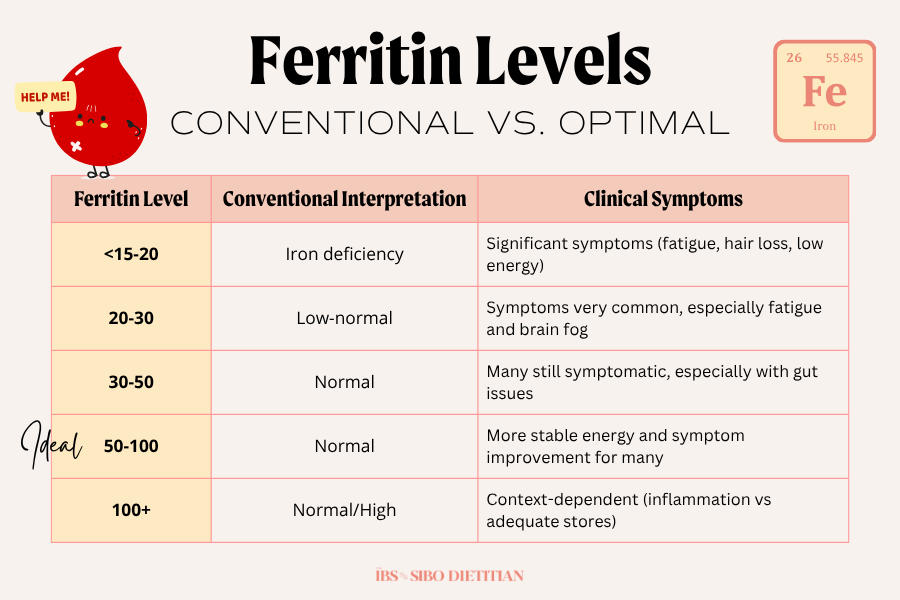
Many conventional lab ranges consider ferritin “normal” as low as 15–20, but this is where things can become misleading. These reference ranges are based on population averages, not necessarily what is optimal for how your body functions. This means you can fall within the “normal” range on paper and still feel symptomatic.
In practice, I often see clients struggling well before ferritin drops below the conventional cutoff. Symptoms like fatigue, brain fog, and hair shedding are common when ferritin is below 30, and very frequently even in the 30–50 range. This is especially true in individuals with gut issues like SIBO, where absorption and iron regulation may already be compromised.
How SIBO Contributes to Low Ferritin
When we look at the connection between low ferritin and SIBO, there are a few key mechanisms at play.
1. Impaired Absorption
Iron is primarily absorbed in the small intestine, which is exactly where SIBO occurs.
When bacteria overgrow in this area, they can:
- Compete with you for nutrients (including iron)
- Damage the intestinal lining
- Interfere with normal digestion and absorption
So even if you’re eating iron-rich foods, your body may not be absorbing them effectively.
2. Chronic Inflammation and Disrupted Iron Recycling
This is one of the most overlooked pieces. Your body is actually very efficient at recycling iron rather than relying on what you eat. In fact, almost 90% of the iron you use daily comes from breaking down old red blood cells, making it critical to understand when ferritin is low.
How Iron Recycling Should work
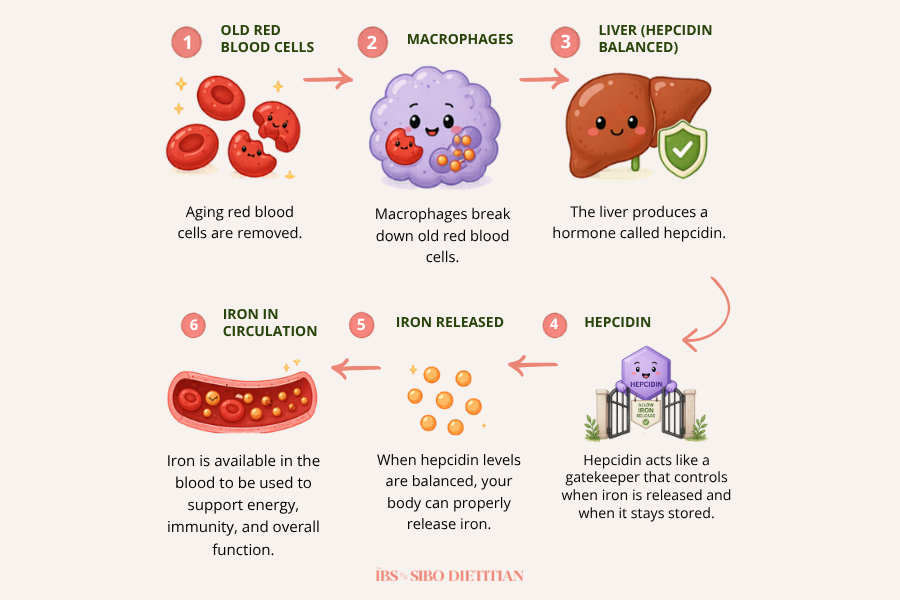
Macrophages help recycle iron by breaking down old red blood cells and releasing that iron back into the body for reuse.
The liver helps regulate iron balance by producing a hormone called hepcidin, which acts as a signal for whether iron should be released or held in storage. When your gut is functioning properly and inflammation is low, this creates a steady supply of usuable iron for energy, and overall function.
Iron Recycling in the Presence of Inflammation
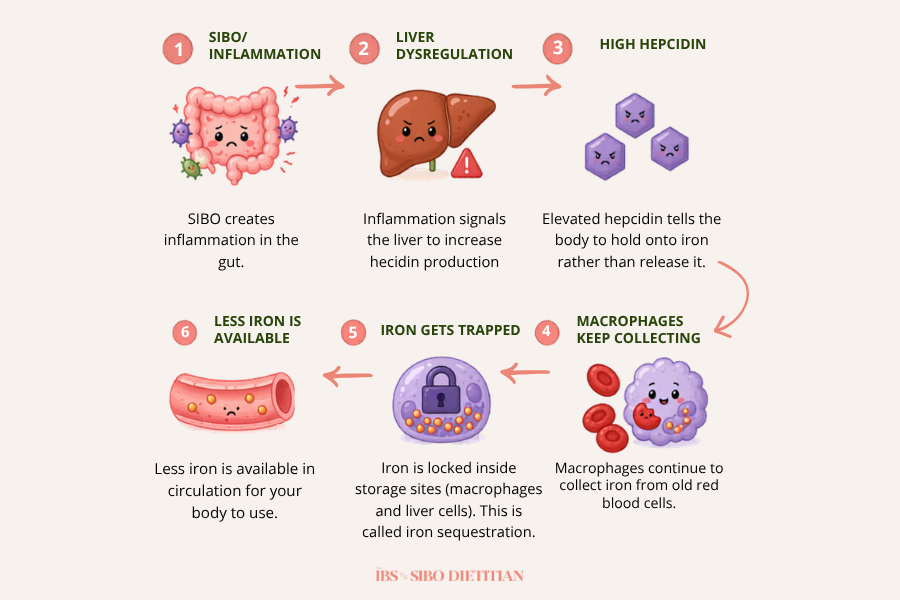
SIBO often creates a inflammatory state in the gut. Inflammation signals the liver to increase production of hepcidin. When hepcidin is elevated, it tells the body to hold onto iron rather than release it, disrupting the normal flow of iron through the body.
When Hepcidin is elevated:
- Macrophages continue to collect iron from old red blood cells
- Iron is trapped inside storage sites (like macrophages and liver cells). This is often referred to as iron sequestration.
- There is less iron is available in circulation for the body to use
So this means that iron is technically present in the body, but not available where you need it. This is a big reason why ferritin can stay low, even when you’re supplementing. And to make matters worse, studies have even shown that supplementation, especially via IV can actually increase hepcidin levels, exacerbating iron deficiciency and increasing iron demand.
This is why the focus cannot just be on adding more iron, it has to be on improving gut health, reducing inflammation, and supporting how your body is actually recycling and using iron.
Cofactors for Iron Absorption and Transport
Iron does not work in isolation. This is where I see a lot of people get stuck.
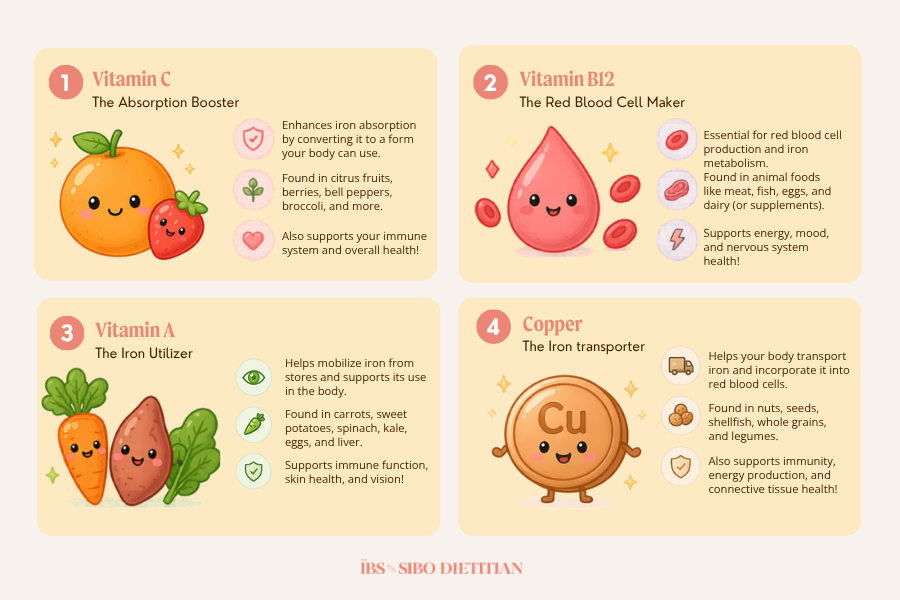
Even if you are taking iron, your body needs the right cofactors to absorb, transport, and utilize it properly.
Some of the most important include:
- Vitamin C to enhance iron absorption
- Copper (via ceruloplasmin) to help mobilize and transport iron
- Vitamin A (retinol) to support iron metabolism and release from storage
- B vitamins (especially B12) for red blood cell production
- Magnesium for overall enzymatic support
Ceruloplasmin, in particular, plays a key role. It is a copper-dependent protein that helps move iron out of storage and into circulation. If this process is impaired, iron can remain trapped and unavailable.
This is why simply adding more iron without addressing these cofactors often does not lead to meaningful improvements.
Why Iron Supplementation Can Backfire in SIBO
This is where I tend to take a different approach. In many cases, iron supplementation (especially oral supplementation) alone either fails or makes things worse.
Here’s why:
First, if your gut is not absorbing well, you are not actually fixing the deficiency. You are just adding more iron into a system that cannot use it efficiently.
Second, iron can:
- Feed certain bacteria in the gut
- Increase oxidative stress in the intestine
- Slow motility and contribute to constipation
And when motility slows, SIBO symptoms often worsen. So you can end up in a cycle where you are trying to fix your iron levels while unintentionally making the root issue harder to resolve. Once you have cleared the SIBO and have started to improve gut inflammation, most times you will start to see improvements in your ferritin levels without supplementation at all.
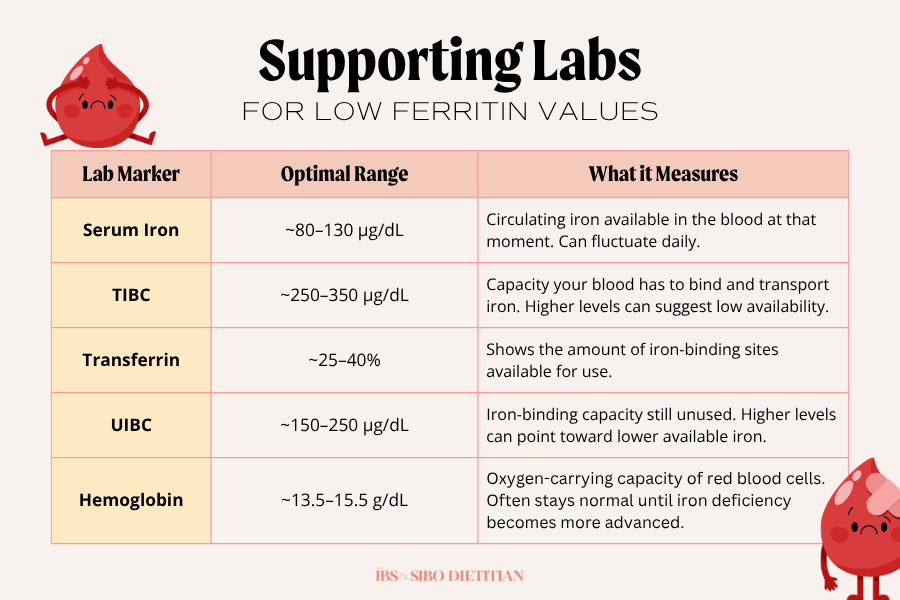
Other Labs to Look At (Beyond Ferritin)
Ferritin alone does not tell the full story. As a dietitian, when I am evaluating low ferritin and SIBO, I look at patterns across multiple labs:
Final Thoughts: Common Mistakes and What to do Next with Ferritin and SIBO
There are a few patterns that tend to keep people stuck.
- Taking iron supplements without addressing gut function.
- Over-restricting the diet, which reduces intake of both iron and the cofactors needed to use it.
- Ignoring motility and digestion, which are essential for both SIBO recovery and iron (or nutrient in general) absorption.
If you are dealing with low ferritin and suspect SIBO, the goal is not just to “add more iron.” It is to create an environment where your body can actually absorb, recycle, and use it.
This often includes:
- Supporting digestion (stomach acid, enzymes, mindful eating)
- Improving motility and meal spacing
- Addressing underlying SIBO or gut dysfunction
- Ensuring adequate intake of both iron and its cofactors
- Gradually expanding the diet to support nutrient diversity
This is why a more comprehensive, structured approach tends to work better than isolated interventions.
FAQ: Low Ferritin and SIBO
Can SIBO cause low ferritin?
Yes. Through impaired absorption, increased inflammation, and disrupted iron regulation, SIBO can contribute significantly to low ferritin.
Why is my ferritin low but iron normal?
This often reflects issues with storage, recycling, and regulation rather than simple intake. Most of the time iron is present, but trapped in storage sites and less available in circulation for the body to use.
Should I take iron supplements if I have SIBO?
It depends. In many cases, addressing gut function first leads to better long-term outcomes.
What ferritin level is too low?
Many people experience symptoms below 30, and even in the 30–50 range.
Read More Recent Posts
- Are Peas Low FODMAP? A Dietitian’s Guide to Adding Peas to Your Diet With IBS and SIBO
- Chamomile Tea for GERD: Does It Actually Help with Acid Reflux?
- When I Recommend Digestive Enzymes for IBS as a GI Dietitian
- Best Cortisol Reducing Supplements: A Dietitian’s Guide and How it Relates to Your Gut
- Bitter Herbs for Digestion: What They Do and Which Ones Are Worth Trying