I am sure at one point on your gut healing journey you have been told to “just add more fiber.” However, every time you try to add more fiber, it seems to make your bloating, gas, or constipation worse. One particular type of fiber that I often get asked about is flaxseed. It is often promoted as good for digestion, hormones, and inflammation, but as with everything, there is conflicting advice on whether it is truly Low FODMAP and good for IBS and SIBO.

As a Registered Dietitian specializing in IBS and SIBO, here is what I want you to understand. Flaxseed is one of the most versatile and underused tools for adding both soluble and insoluble fiber to the diet. Additionally, it is low FODMAP when used in the right form and the right amount. The trick is knowing which form to use, how much is actually low FODMAP, and how to add it in without overwhelming an already sensitive gut.
Nutritional Breakdown of Flaxseed
Flaxseed is one of the most nutrient-dense seeds you can add to your diet. It is not the highest fiber seed but the wide variety of nutrients it contains is a big part of why it earns a spot in my IBS and SIBO recommendations.
A serving of ground flaxseed (about 14 grams) contains:
- 70 calories
- 3 grams of protein
- 6 grams of fat (mostly omega-3 ALA)
- 4 grams of carbohydrates
- 3 grams of fiber (a mix of soluble and insoluble)
- Magnesium, manganese, phosphorus, and thiamine
- Lignans (a polyphenol with hormone-modulating and antioxidant effects)
The most clinically valuable pieces here are the fiber blend, the omega-3 fatty acids, and the lignans. Flaxseed is one of the richest plant sources of alpha-linolenic acid (ALA), an omega-3 fatty acid with anti-inflammatory effects, and the highest dietary source of lignans in the human diet (Parikh et al., Nutrients, 2019).

Join the Free Masterclass
Learn the real reason SIBO and IBS symptoms keep coming back, and what's actually missing from most protocols. No cost, no commitment.
Register NowWhy Flaxseed Is Good for IBS and SIBO
Flaxseed is one of the few foods that delivers fiber, omega-3s, lignans, and key minerals in a single serving, which is why it can support so many parts of gut function at once. This includes motility, inflammation, hormone balance, and the microbiome.
Some of the biggest benefits include:
- Soluble fiber for stool consistency. Soluble fiber forms a gel in the gut that softens stool and supports more complete evacuation, which is especially helpful for IBS-C and “back-up” bloating but also great to thicken up loose stools.
- Insoluble fiber for motility. Insoluble fiber adds bulk and gently stimulates colonic motility, helping food and waste move through the digestive tract on a healthy timeline.
- Anti-inflammatory omega-3s. The ALA in flaxseed has been shown to reduce inflammatory markers, which is important in IBS and SIBO due to it’s inflammatory nature (Goyal et al., Journal of Food Science and Technology, 2014).
- Lignans for hormone balance. Flaxseed is the highest dietary source of lignans, which support healthy estrogen metabolism. This is relevant for women dealing with hormonal bloating or IBS that flares with their cycle.
- Prebiotic effects. The soluble fiber acts as fuel for beneficial gut bacteria, supporting microbial diversity in the large intestine.
- Mineral contribution. Flaxseed contributes magnesium, which is an electrolyte that plays a key role in motility and stool softening.
For SIBO specifically, flaxseed is one of the few fiber sources that tends to be tolerated well at low doses, even during treatment phases when other fibers cause flares.
Is Flaxseed Low FODMAP?
The answer depends on the form. Each form (whole, ground, and oil), all behave differently in the gut and carry different FODMAP loads.
Whole Flaxseed
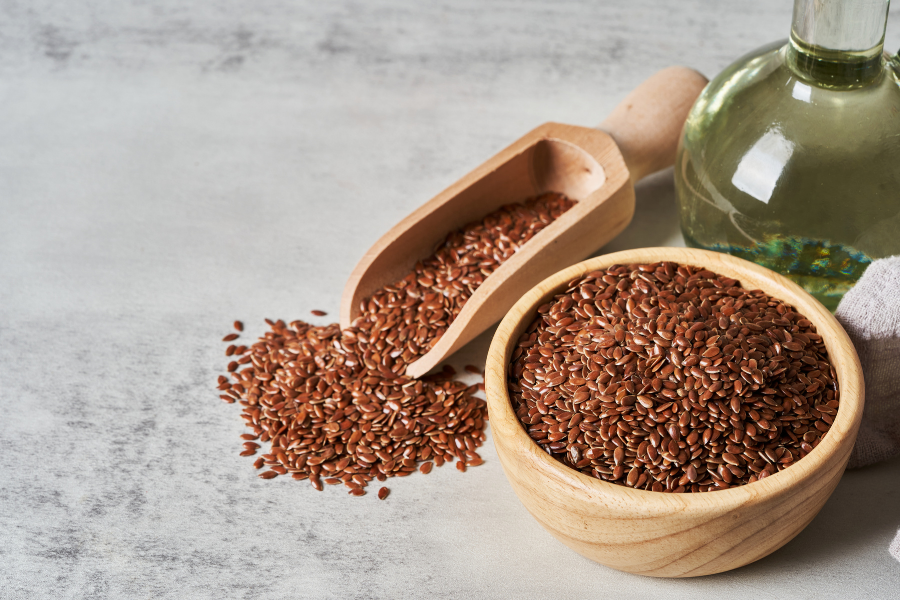
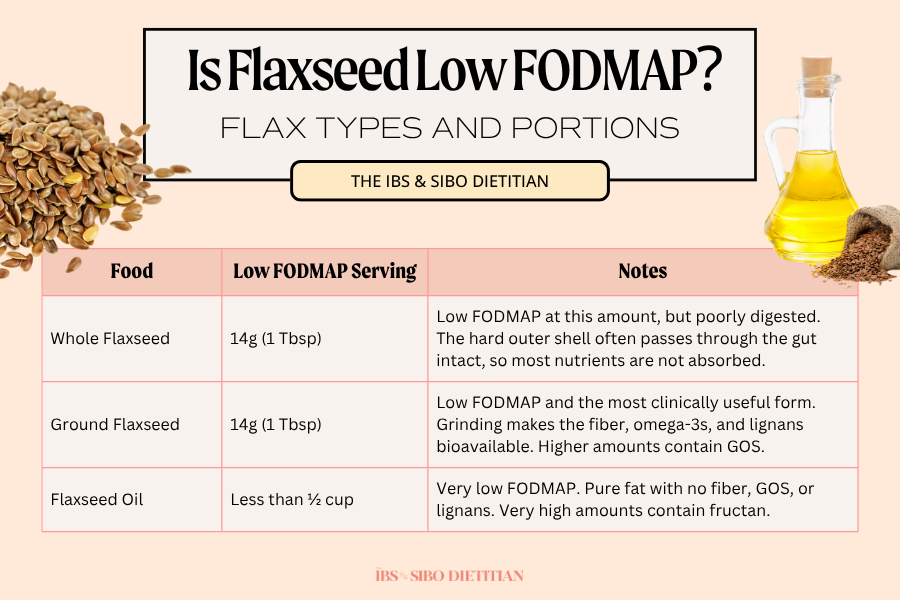
Whole flaxseed is low FODMAP at a serving of 14 grams according to Monash University testing. The catch is that whole flaxseed is poorly digested. The hard outer shell often passes through the gut undigested, which means you are not actually absorbing the omega-3s, lignans, or most of the nutrients inside. Whole flax can also be more irritating to a sensitive gut because it adds insoluble bulk without the soluble gel that comes from grinding it.
For most of my clients, I do not recommend consuming the whole flaxseed because you are not getting the benefits you came for.
Ground Flaxseed
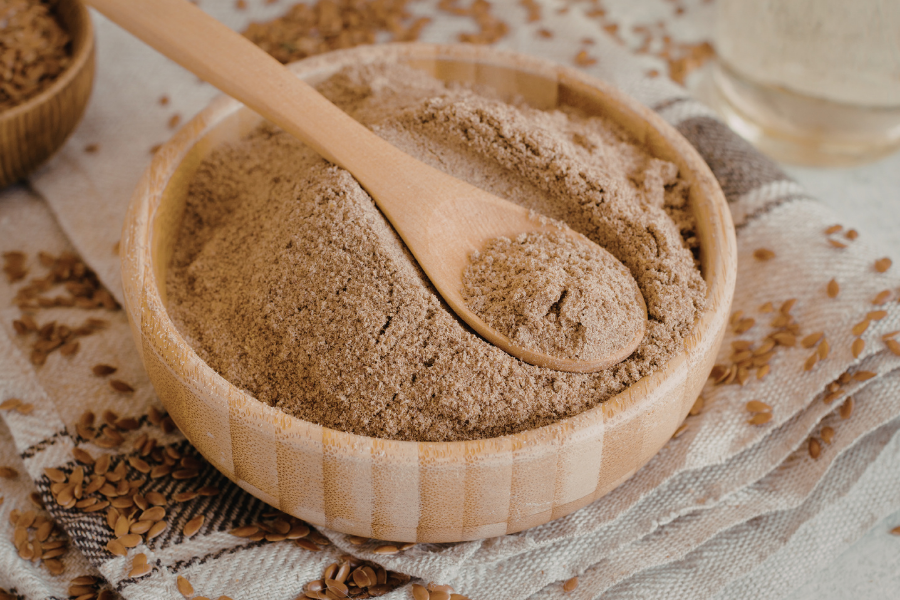
Ground flaxseed is the form I recommend most in clinical practice, and it is low FODMAP at a serving of 7 grams per Monash testing. Grinding the seed breaks the outer shell and makes the nutrients bioavailable. You get access to the soluble fiber gel, the omega-3s, and the lignans in a way your gut can actually use.
This is the form that supports both IBS-C and IBS-D, promoting soft and complete bowel movements, in addition to the broader gut and hormone benefits flaxseed is known for.
Flaxseed Oil
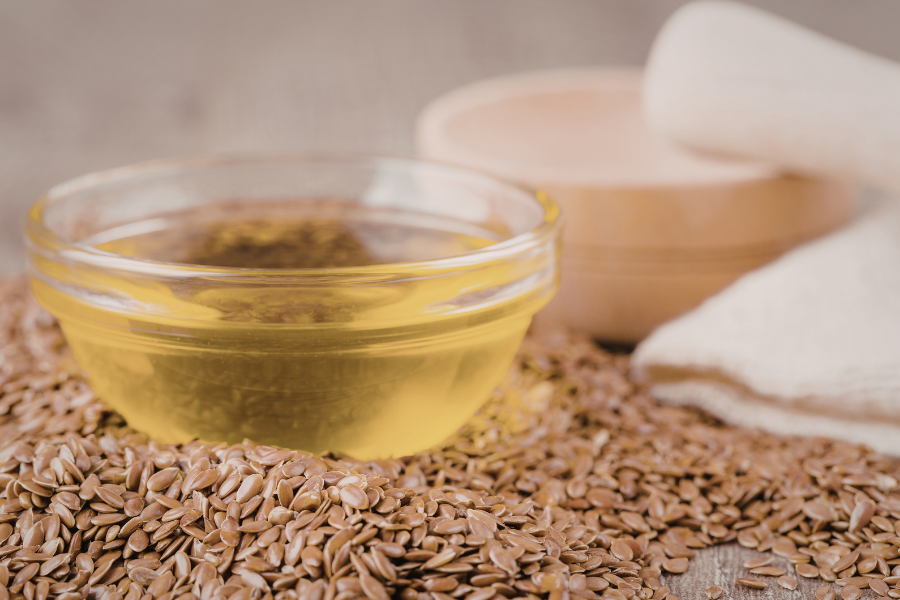
Flaxseed oil is low FODMAP because oils generally do not contain FODMAPs (FODMAPs are short-chain carbohydrates, and oils are pure fat). This form of flaxseed retains the omega-3 ALA content of the seed, but it does not contain the fiber or the lignans, which means it is not interchangeable with ground flaxseed. If your goal is fiber, motility, or hormone support, the oil will not get you there. If your goal is a concentrated source of plant-based omega-3s, the oil can be a useful tool.
I wouldn’t recommend flaxseed oil as a substitute for ground flaxseed as they are doing different jobs.
What FODMAP Is in Flaxseed?
While flaxseed is low FODMAP at the right serving size, in higher amounts, it contains one FODMAP that can become problematic in those with IBS and SIBO.
- Galacto-oligosaccharides (GOS)
Going above the recommended serving pushes flaxseed from low FODMAP to high FODMAP, and portion size makes a noticeable difference for IBS and SIBO clients.
What is GOS?
GOS stands for galacto-oligosaccharides, a chain of galactose sugar molecules linked together by a bond the human digestive tract cannot break apart. We do not produce the enzyme (alpha-galactosidase) needed to digest them, so GOS passes through the small intestine intact and is fermented by bacteria in the colon.
GOS containing foods are shown to have a positive impact on the microbiome. However, for those with IBS or highly sensitive guts, the gas produced through fermentation can lead to a less favorable reaction.
This process can lead to:
- Bloating
- Gas
- Abdominal pain
- Changes in bowel movements
GOS is also found in legumes (beans, lentils, chickpeas), cashews, and some grains, which is why these foods often trigger similar IBS symptoms.
On a positive note though, GOS is also a prebiotic, meaning it feeds beneficial bacteria like Bifidobacterium (Wilson & Whelan, Journal of Human Nutrition and Dietetics, 2017). Small amounts can support a healthy microbiome, so it is very beneficial to microbiome healing if consumed and tolerated in small amounts.
Ways to Add Flaxseed Into Your Diet
Flaxseed is easy to add to your routine without overhauling your diet. Start with 1 tablespoon of ground flaxseed daily and build from there based on tolerance.

Some of my favorite ways to use it:
- Soaked overnight in oats or chia pudding. This is one of the gentlest ways to introduce flaxseed because the soaking softens the fiber and creates a soluble gel that is easier on the gut. Combine 1 tablespoon ground flax with oats, chia seeds, and your milk of choice the night before.
- Stirred into yogurt. A simple add-in that pairs well with the soluble fiber and protein in yogurt. Top with low FODMAP fruit and a few nuts for a balanced snack.
- Blended into smoothies. Easy delivery for clients who already use smoothies. Adds creaminess and helps slow blood sugar response from the fruit.
- Mixed into baked goods. Ground flax can be added to pancakes, muffins, and breads. It can also be used as an egg substitute (1 tablespoon ground flax + 3 tablespoons water = 1 “flax egg”). Perfect for vegan cooking and baking.
- Sprinkled on salads or roasted vegetables. A simple way to add fiber and healthy fats to a savory meal.
A few clinical reminders. Always pair flaxseed with adequate water, because fiber without enough hydration can backfire and worsen constipation. Keep your serving at 1 tablespoon per day to start, and increase slowly only if well tolerated. And store ground flaxseed in the fridge or freezer to protect the omega-3s from going rancid.
Alternatives to Flaxseed
Flaxseed works beautifully for many of my clients, but not for everyone. Some people find the texture or taste hard to tolerate, and others have a gut that is too reactive even to the small dose I recommend. The good news is there are several other low FODMAP seed options that can fill a similar role.
- Chia seeds. Low FODMAP at 2 tablespoons per Monash testing. Similar omega-3 and soluble fiber profile, often tolerated well by IBS and SIBO clients. Higher in fiber content and great for chia pudding or stirred into oats.
- Pumpkin seeds (pepitas). Low FODMAP at 1 tablespoon per Monash testing. They are mineral-rich, especially in zinc and magnesium, and add a satisfying crunch to salads, oatmeal, or smoothies.
- Hemp seeds (hemp hearts). Low FODMAP at 2 tablespoons per Monash testing. Because it is higher in protein and healthy fats than fiber, they fill a different role, but still a great seed to layer into the diet.
- Psyllium husk. Psyllium is a soluble fiber that forms a gel and has strong evidence for improving stool consistency in IBS (Moayyedi et al., American Journal of Gastroenterology, 2014). Start at 1 teaspoon per day and increase slowly with plenty of water.
- Basil seeds (sabja seeds). Low FODMAP and similar to chia in texture once soaked. They are high in soluble fiber, often used in cuisines where they are stirred into drinks or desserts. A nice option for clients looking for variety.
In practice, I often layer a couple of these together rather than relying on flaxseed alone. The combination of seeds gives you a broader fiber and mineral profile and tends to be better tolerated than a high dose of any one of them.

Frequently Asked Questions
How much flaxseed should I eat per day for IBS?
Start with 1 tablespoon of ground flaxseed daily. This is the low FODMAP threshold per Monash testing and a clinically effective dose for fiber, motility, and hormone support. You can build up slowly from there based on tolerance, but 1 tablespoon is often enough to make a noticeable difference.
Do I have to grind flaxseed, or can I eat it whole?
You can eat it whole, but you will not absorb most of the nutrients. The hard outer shell of a whole flaxseed passes through the gut intact, taking the omega-3s, lignans, and most of the fiber benefits with it. For most clients, ground flaxseed is the form I recommend.
Can flaxseed cause bloating?
Yes, especially in higher amounts. Flaxseed contains GOS, a FODMAP that ferments in the colon and produces gas. Staying within the 1 tablespoon daily serving and pairing it with adequate hydration usually prevents this. If even small amounts trigger bloating, an underlying issue like SIBO or constipation may need to be addressed first.
Is flaxseed safe during SIBO treatment?
For most clients, yes, at small doses. Ground flaxseed at 1 tablespoon per day is generally well tolerated even during active SIBO treatment because the fiber is gentle and the dose stays below the FODMAP threshold. If you are very symptomatic or in an active flare, you may want to pause it temporarily and reintroduce during the rebuilding phase.
Should I soak flaxseed before eating it?
Soaking is not required, but it can be helpful. Soaking ground flaxseed in oats, chia pudding, or water softens the fiber and creates a soluble gel that is easier on the gut. This is one of the gentlest ways to add it in for clients with sensitive digestion.
What is the difference between flaxseed and chia seeds for IBS?
Both are low FODMAP at small servings, both contain omega-3 ALA and soluble fiber, and both support motility. Flaxseed is higher in lignans, which support hormone balance, while chia seeds are slightly higher in fiber, calcium, and iron. Many clients tolerate chia better when flaxseed feels too irritating, but they can also be used together for a broader nutrient profile.
Can flaxseed replace fish oil?
Not exactly. Flaxseed is rich in ALA, the plant-based omega-3, but the body has to convert ALA into EPA and DHA (the omega-3s found in fish) and that conversion is inefficient. If your goal is anti-inflammatory omega-3 support, flaxseed is helpful, but most clients still benefit from a quality fish oil for adequate EPA and DHA.
The Bottom Line
Flaxseed is low FODMAP when you choose the right form and stay within the right serving size. Ground flaxseed at 1 tablespoon per day is my go-to for IBS and SIBO clients who need a little more fiber, better motility, and a gentle anti-inflammatory boost. Whole flaxseed is poorly absorbed, and flaxseed oil has its own role but is not a substitute for the ground seed.
If flaxseed has been on your list of “scary fiber foods,” it does not have to be. Start slow and pair it with adequate hydration, and pay attention to how your gut responds. For most of my clients, this small daily habit becomes one of the most reliable foundations of their gut routine.