Apples are often one of the first foods people question and in fact miss when starting a low FODMAP diet. They are an easy snack, high in fiber, and widely recommended. I mean an apple a day keeps the doctors away right? But for many people with IBS or SIBO, they’re also one of the quickest ways to trigger bloating, gas, or urgency.
So to answer this question are apples low FODMAP, the answer is no. However, this does not mean that you will never be able to add apples into your diet, just not now.
My name is Katrina Cox and I specialize in IBS, SIBO, and the low FODMAP diet. In this post, I’ll break down why apples can be so triggering, the portions you should be sticking to, and how to approach fruits all together on the low FODMAP diet.

What Does “Low FODMAP” Actually Mean?
Before we get into apples specifically, it’s important to understand what the low FODMAP diet actually is.
FODMAPs (Fermented Oligosaccharides, Disaccharides, and Polyols) are types of carbohydrates that are:

Join the Free Masterclass
Learn the real reason SIBO and IBS symptoms keep coming back, and what's actually missing from most protocols. No cost, no commitment.
Register Now- Poorly absorbed in the small intestine
- Osmotically active (they pull water into the gut)
- Rapidly fermented by bacteria in the colon
The low FODMAP diet a three phase diet (elimination, reintroduction, and maintenance), and not intended to be a long-term diet. It’s designed to:
- Reduce symptoms short term
- Identify which FODMAP groups you personally react to
- Gradually reintroduce foods to expand your diet again
This is where a lot of confusion happens. The goal is not to avoid foods like apples forever, but to understand how your body responds and build tolerance over time.
Why Are Apples High FODMAP?
Apples contain multiple FODMAPs, but the two main ones are:
- Excess fructose
- Sorbitol (a polyol)
This combination is exactly why apples tend to be more triggering than many other fruits.
Fructose: Why It’s Not Always Absorbed Well
Fructose absorption depends on its relationship with glucose. When fructose is paired with a similar amount of glucose, it’s typically absorbed more efficiently. This is the case for table sugar which is comprised of equal parts glucose and fructose. But when there is more fructose than glucose, like in high fructose corn syrup, absorption becomes less efficient.
Apples fall into this category.
This means:
- Fructose can remain in the small intestine
- It pulls water into the gut (osmotic effect)
- It then moves into the colon where bacteria ferment it
This process can lead to:
- Bloating
- Gas
- Abdominal discomfort
- Changes in bowel movements
Sorbitol: The Most Osmotic FODMAP
Sorbitol is a type of polyol, and it’s particularly impactful. If its found naturally in fruit such as apples and mango, but also added to food as a sweetener specifically in low carb or low calorie foods. It is the smallest FODMAP and is also considered one of the most osmotic FODMAPs, meaning it draws water into the intestines more readily than other types.
Sorbitol is:
- Slowly absorbed
- Easily fermented
- Often poorly tolerated in IBS and SIBO
When you combine fructose + sorbitol in the same food, like apples, the effect can be amplified. This is why even small amounts can trigger symptoms for some people.
Apple FODMAP Guide: Serving Sizes & Forms
When it comes to apples, the form you eat them in matters just as much as the portion. Many apple-based products are more concentrated, making them easier to overconsume and more likely to trigger symptoms. This is why apples are generally avoided during the elimination phase. In general, here are the breakdown of portion sizes and FODMAP content.
- Low FODMAP serving: ~20 grams
- Moderate serving: ~31 grams
- High FODMAP serving: ~200 grams
For context, a medium apple is usually well into the high FODMAP range.
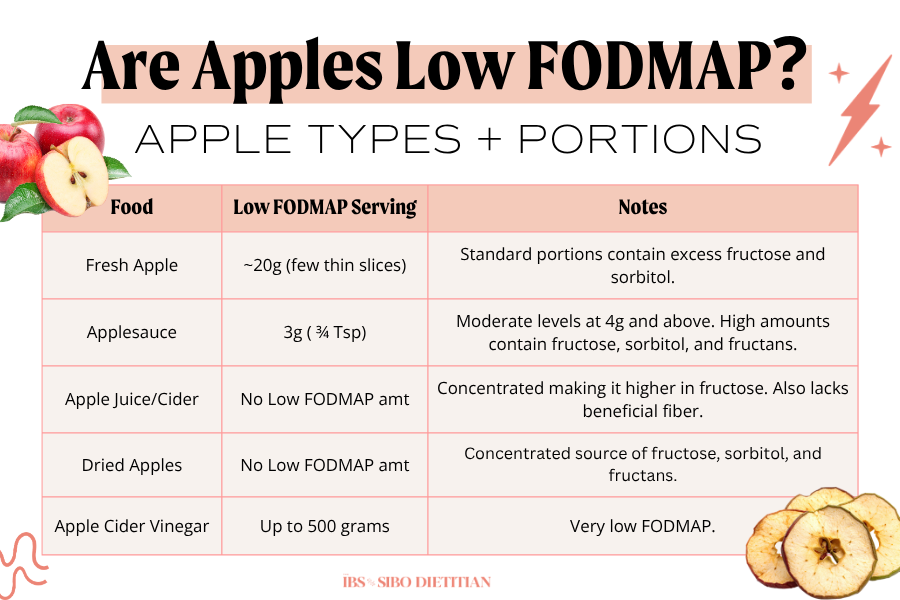
As you can see, apples in most forms are considered high FODMAP, especially in typical serving sizes. This is why they are usually removed during the elimination phase and reintroduced later in a more structured way.
Why Apples Can Feel Especially Triggering
For many people, apples cause bigger problems than some of the other FODMAP foods. It is not only due to the FODMAP content, but other factors also come into play.
This comes down to a combination of factors:
- Multiple FODMAP types (fructose + sorbitol)
- Strong osmotic effect
- Rapid fermentation
- Raw fiber structure requiring more digestion
When all of these are layered together, apples can create a perfect storm for symptoms. However, once you heal your SIBO or calm your gut, many foods, including apples, can be reintroduced successfully. If the root cause (SIBO, inflammation, etc.) is addressed, the tolerance of fodmaps and ability to digest all foods improves.
As a dietitian, I see so many of my clients enjoy apple picking and even apple pie once we discovered their root causes. It is important that you are reintroducing foods in a strategic way though, and working with a dietitian that is well-versed in the Low FODMAP diet.
What to Eat Instead During the Elimination Phase
During the elimination phase of the Low FODMAP diet, the goal is not to remove all fruit. It’s to choose options that are less likely to trigger symptoms.
Some well-tolerated lower FODMAP fruits include:
- Berries (strawberries, blueberries)
- Tropical fruits (papaya, starfruit, dragonfruit)
- Citrus (oranges, mandarins)
- Kiwi
- Firm bananas
These provide variety, fiber, and nutrients without the same combination of fermentable carbohydrates found in apples.
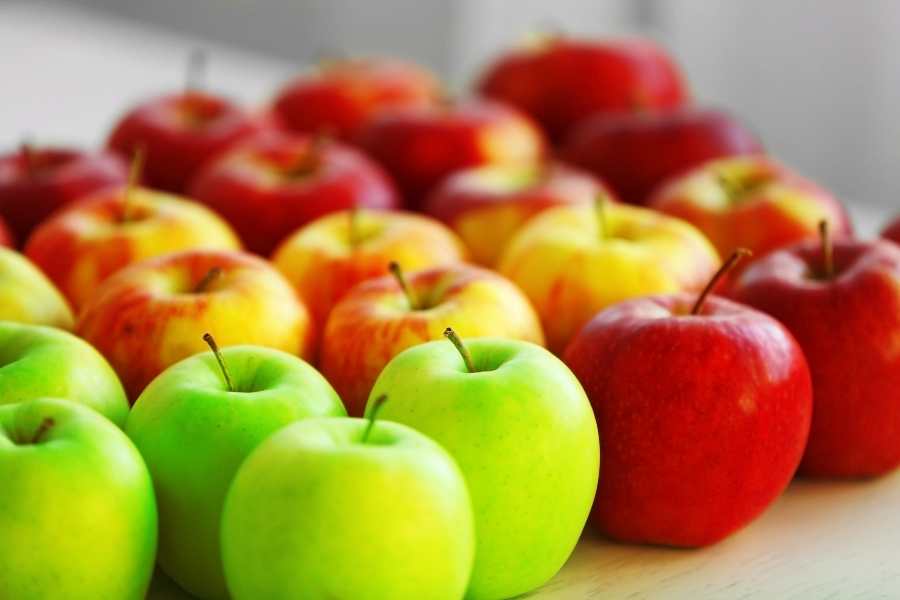
Can You Ever Eat Apples Again?
It is absolutely possible to eat apples again, but when you reintroduce them matters. Since apples are high in both fructose and sorbitol, I recommend first testing your tolerance to each of these FODMAP groups individually. That way, you’re not guessing what your body is reacting to, and you can reintroduce apples with much more clarity and confidence.
The goal is not to permanently eliminate apples, but to understand your personal threshold and reintroduce them strategically when your body is in the appropriate healing stage.
Final Thoughts: Apples and the Low FODMAP Diet
Apples are a high FODMAP food due to their combination of fructose and sorbitol, which can make them particularly triggering for people with IBS or SIBO.
But this does not mean they are “off limits” forever. When used appropriately within the structure of the low FODMAP diet, they can be reintroduced in a way that supports both symptom management and long-term flexibility.
More Low FODMAP Foods to Explore
If you’re starting to look more closely at how different foods impact your symptoms, apples are just one piece of the puzzle.
Here are a few other posts where I break down common foods and how they fit into a low FODMAP approach:
- Is Corn Low FODMAP? Breaking it Down
- Can You Have Mushrooms on a Low FODMAP Diet?
- Is Bread Low FODMAP? Exploring Bread Options
- Is Sushi Low FODMAP? A Dietitian’s Guide for IBS
If you’ve ever been told to “just go on the low FODMAP diet” and handed a food list with no explanation, you know how overwhelming and discouraging it can feel. The truth is, the low FODMAP diet isn’t meant to be a lifelong restriction. When done the right way, it’s a short-term tool to help calm symptoms, identify your personal triggers, and build a way of eating that actually works for you. If you’re feeling overwhelmed by what to eat, what to avoid, and how to actually apply this in real life, you’re not alone.
I created the Complete Guide to Low FODMAP to help you feel more confident making choices without over-restricting.