If you have IBS or follow a low FODMAP diet, eating at restaurants can feel overwhelming. Many people assume sushi is not low FODMAP and off-limits because of ingredients like spicy mayo, sauces, or avocado.
As a Registered Dietitian specializing in IBS and SIBO, I help clients learn how to enjoy food again without fear. Sushi is a great example of a meal that can absolutely fit into any stage of the low FODMAP diet when you know what to look for. In this post, we will walk through whether sushi is low FODMAP, which options are typically best tolerated, and how to order sushi with more confidence and less stress.

Quick Answer: Is Sushi Low FODMAP?
Yes, sushi can be low FODMAP. Sushi is a Japanese-style dish made with seasoned rice, seafood, vegetables, and seaweed. It can range from simple options like sashimi or basic rolls to more complex rolls with sauces and added ingredients. Sushi is generally well tolerated for many people with IBS and SIBO. The most common triggers are not the sushi itself, but rather added sauces, fried components, and certain flavorings.
Simple sushi or maki rolls contain:
- Rice
- Fish or seafood (raw or cooked)
- Nori (seaweed)
- Vegetables
Because sushi is made fresh to order, it is also one of the most customizable restaurant meals for people following a low FODMAP diet. In my clinical experience working with IBS and SIBO clients, sushi is frequently a go-to restaurant meal because it can be kept very simple.

Join the Free Masterclass
Learn the real reason SIBO and IBS symptoms keep coming back, and what's actually missing from most protocols. No cost, no commitment.
Register NowThe biggest issues tend to come from sauces, fried components, or large portions of certain ingredients that are added to the sushi.
What This Means for IBS and SIBO
From a digestive standpoint, sushi can be one of the more flexible restaurant options. There are actually some additional benefits to your gut when you consume sushi as well. Here are couple of reasons sushi tends to work well for many people with IBS and SIBO.
Simple ingredients
Basic sushi rolls usually contain only a few ingredients, which makes it easier to avoid triggers.
Balanced macronutrients
A typical sushi meal contains:
- protein from fish
- carbohydrates from rice
- vegetables
This balance can help stablize blood sugars and hunger, as well as supporting your migrating motor complex (MMC) and keeping your motility in line.
Resistant Starches
Resistant starch is a type of carbohydrate that “resists” digestion in the small intestine and instead travels to the large intestine, where it acts more like a gentle prebiotic fiber. There, it can help support beneficial gut bacteria and the production of short-chain fatty acids like butyrate, which play a role in gut lining health and inflammation regulation. For individuals with IBS or SIBO, resistant starch can be helpful when introduced appropriately, as it tends to be better tolerated than more rapidly fermentable fibers.
Sushi rice is a great example because when rice is cooked and then cooled, it naturally forms resistant starch through a process called retrogradation.
Customizable preparation
Unlike many restaurant dishes, sushi is typically made to order, which means restaurants can often remove sauces or ingredients that trigger symptoms. It is also not a fried food in it’s natural state, which means one less gut irritant that you have to worry about that other restaurants often contain.

Sushi Ingredients: What Is Low FODMAP?
Here is a breakdown of common sushi ingredients and how they fit into a low FODMAP diet.
Sushi Rice
Low FODMAP | No specific restriction for typical servings
Sushi rice is primarily a simple carbohydrate that is easy to digest. When cooked and cooled, it forms resistant starch, which can support gut health and may be better tolerated than more fermentable fibers.
Nori (Seaweed)
Low FODMAP | No specific restriction
Nori is naturally low FODMAP and provides minerals like iodine. It is very well tolerated and adds minimal digestive burden.
Salmon, Tuna, and Other Fish
Low FODMAP | No restriction
All plain animal proteins are naturally low FODMAP because they contain no fermentable carbohydrates. Fatty fish like salmon also provide omega-3s, which may support inflammation regulation.
Shrimp
Low FODMAP | No restriction
Shrimp is another easy-to-digest protein source. Just be mindful of preparation methods (avoid garlic sauces or heavy frying).
Crab (Real Crab)
Low FODMAP | No restriction
Fresh crab is a low FODMAP protein option and generally well tolerated.
Imitation Crab (Surimi)
Low FODMAP in small amounts (~½ cup / ~75g)
Imitation crab is typically made from white fish and starches. It is usually tolerated in sushi rolls because the portion is small, but larger amounts may contain added starches or wheat that could be problematic for some individuals.
Cucumber
Low FODMAP | No restriction
Cucumber is very low in fermentable carbohydrates and adds hydration and fiber without triggering symptoms.
Carrots
Low FODMAP | No restriction
Sometimes included in rolls, carrots are well tolerated and provide a gentle source of fiber.
Avocado
Low FODMAP in small amounts (~⅛ avocado / ~30g)
Avocado contains sorbitol (a FODMAP), but small portions are typically tolerated. In sushi, the amount is often within a safe range, but larger amounts can trigger symptoms.
Cream Cheese
Low FODMAP in small amounts (~2 tablespoons / ~40g)
Cream cheese is low in lactose in small servings and may be tolerated, especially in rolls like a Philadelphia roll.
Soy Sauce
Low FODMAP | No restriction
Soy sauce is fermented, which reduces its FODMAP content. Despite containing wheat, it is typically well tolerated unless someone has celiac disease or a gluten sensitivity.
Tamari (Gluten-Free Soy Sauce)
Low FODMAP | No restriction
A good alternative for those avoiding gluten while still staying low FODMAP.
Eel Sauce
Generally low FODMAP in small amounts (1–2 tablespoons)
Eel sauce is typically made from soy sauce, sugar, and mirin. It is usually tolerated in small amounts, though it’s best used lightly due to added sugars.
Rice Vinegar
Low FODMAP | No restriction
Used in sushi rice seasoning, rice vinegar is low FODMAP and well tolerated.
Sesame Seeds
Low FODMAP | No restriction in typical amounts
Often used as a topping, sesame seeds add flavor and texture without contributing significant FODMAPs.
Pickled Ginger
Low FODMAP in small amounts (~1 tablespoon)
Typically served on the side, small portions are well tolerated and may even support motility due to it’s prokinetic properties.
Sushi Ingredients That May Trigger IBS Symptoms
While sushi can be very IBS-friendly, certain ingredients commonly used in specialty rolls and sauces can be higher in FODMAPs and more likely to trigger symptoms.
Here are the most important ones to be aware of.
Garlic-Based Sauces
High FODMAP | Best to avoid or request without
Many sushi sauces (especially “house sauces”) contain garlic or garlic powder, which are high in fructans. These are one of the most common triggers I see in clients, even when the rest of the roll is low FODMAP.
Spicy Mayo
Often High FODMAP | Depends on ingredients
Spicy mayo typically contains mayonnaise mixed with chili sauce or sriracha, which often includes garlic. It is likely low FODMAP in small portions, but it can still trigger GI symptoms. This is not only due to added ingredients like garlic, but also because of spices. Compounds such as capsaicin in chili powder are considered non-FODMAP triggers and can irritate the gut in sensitive individuals.
Wasabi
Low FODMAP in very small amounts (~1 teaspoon), but use caution
Pure wasabi is low FODMAP, but most wasabi served in restaurants is a mixture that may contain additives. Larger amounts can also irritate the gut due to its spice, even if not FODMAP-related.
Tempura Batter
High FODMAP in larger amounts | Limit intake
Tempura batter is typically made with wheat flour, which contains fructans. While a small amount may be tolerated by some, larger portions or multiple fried rolls can slow digestion.
Mango
Low FODMAP in small amounts (~40g), high in larger portions
Mango contains excess fructose. Small amounts may be tolerated, but sushi rolls with larger amounts or mango-heavy toppings can easily exceed low FODMAP thresholds.
Sweet Sauces (Unagi Sauce, Teriyaki, Glazes)
Moderate to High FODMAP depending on portion and ingredients
These sauces often contain added sugars and sometimes garlic. While small amounts (1–2 tablespoons) are usually tolerated, heavier use can become problematic.
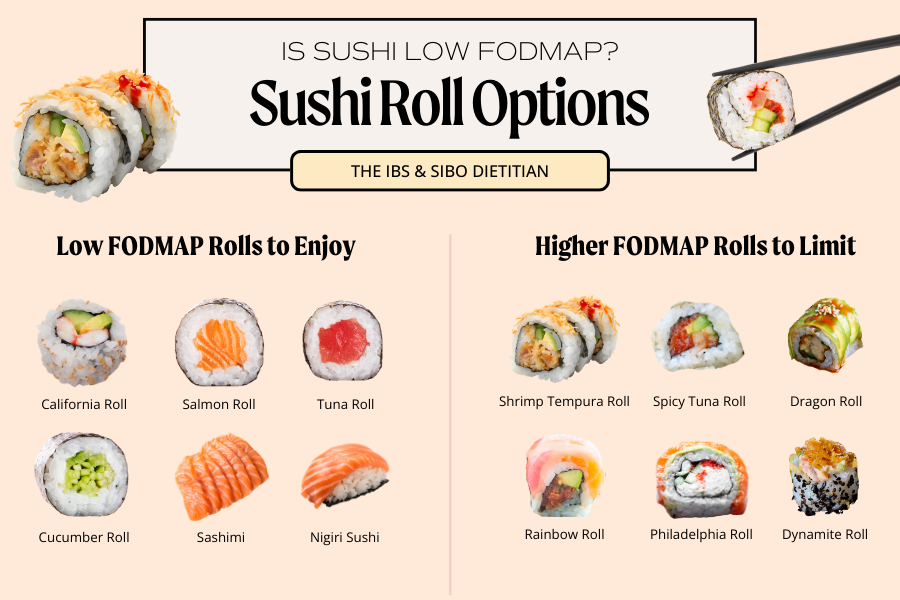
Best Low FODMAP Sushi Orders
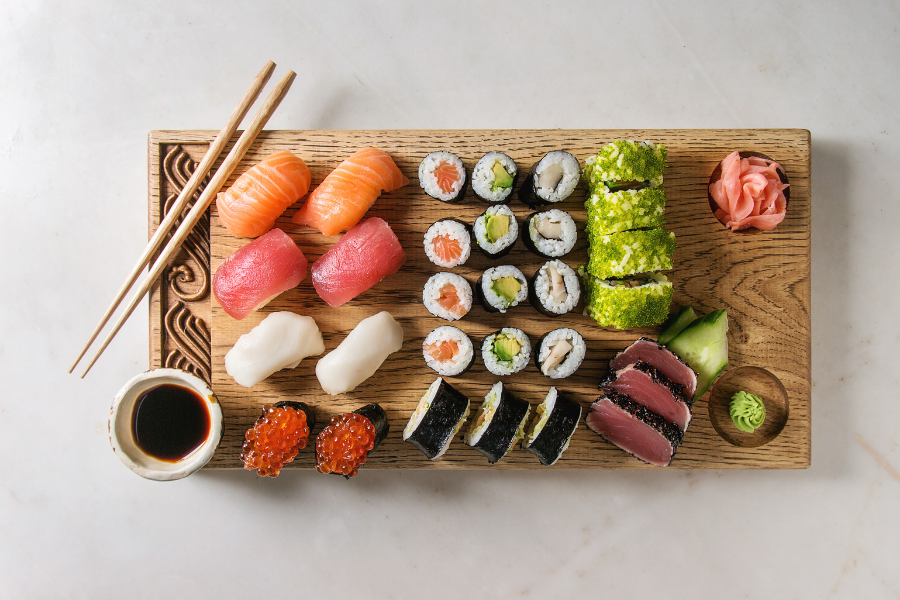
If you want a simple and IBS-friendly sushi order, these options are often good choices.
Salmon Roll (or Tuna Roll)
Simple, minimal ingredients, and easy to digest. These are some of the most reliable low FODMAP options as they contain only fish and rice and don’t commonly contain common triggers such as garlic or onion.
Cucumber Roll
One of the most gentle options, especially if your gut is feeling more sensitive. It’s low FODMAP and free from common triggers, but lower in protein, so pairing it with sashimi can help create a more balanced meal.
California Roll
Usually well tolerated in standard portions. The main thing to watch is the amount of avocado, but most rolls contain a small enough amount that a serving stays within a low FODMAP serving
Sashimi/Nigiri
One of the best options overall. Sashimi is thinly sliced fish (salmon, tuna, yellowtail) and Nigiri is Sashimi placed on a mound of vinegared white rice. Both contain pure protein with no sauces or added ingredients, making it very predictable and easy to tolerate.
Simple Vegetable Rolls
Rolls with ingredients like cucumber or other low FODMAP vegetables can be great options, especially when you want something lighter.
Portion Size Guidance
Even when choosing low FODMAP options, portion size plays an important role. The low FODMAP diet is based on the idea that certain foods are tolerated at specific amounts.
A helpful starting point is one to two simple rolls, or a combination of sashimi and one roll. Eating slowly and stopping when comfortably full can make a noticeable difference in how you digest and ultimately feel after the meal.
How to Order Low FODMAP Sushi at Restaurants
Call Ahead to Feel Prepared
One of the most helpful things you can do before going out to eat is to call the restaurant ahead of time, especially during a slower part of the day.
This gives you the opportunity to:
- ask about ingredients (like garlic, onion, or sauces)
- confirm what can be modified
- identify a few safe options before you arrive
Walking into a restaurant already knowing what you can order takes a lot of pressure off the moment. It can also give the kitchen a heads up to ensure accuracy of your meals.
When you feel more prepared and less stressed, you will shift out of “fight or flight” mode, making it easier to break down your meals.
When You Arrive
Once you’re at the restaurant, here are a few simple strategies to keep things easy:
- Choose simple rolls with minimal ingredients
- Ask for sauces on the side
- Avoid fried or heavily sauced options
- Stick with portions you know you tolerate
- Don’t be afraid to ask questions or request modifications
Sushi restaurants are often very accommodating since most items are made fresh to order.
Support Your Digestion During the Meal
What you do while eating matters just as much as what you order.
To support digestion:
- Slow down and chew your food thoroughly
- Take a few deep belly breaths before and during your meal
- Sit upright and stay relaxed while eating
- Avoid rushing through your meal
These small habits help shift your body into a more “rest and digest” state, which can improve how your gut processes food and reduce symptoms like bloating or discomfort.
Final Thoughts: Is Sushi Low FODMAP?
Yes, sushi can absolutely be part of an low FODMAP diet. In fact, many of my clients find that sushi is one of the easiest restaurant meals to tolerate because it is simple, customizable, and balanced with protein, carbohydrates, and vegetables.
By focusing on basic rolls, limiting sauces, and watching portion sizes of ingredients like avocado, sushi can be a great option when eating out with IBS.
Want More Support Eating Out on Low FODMAP
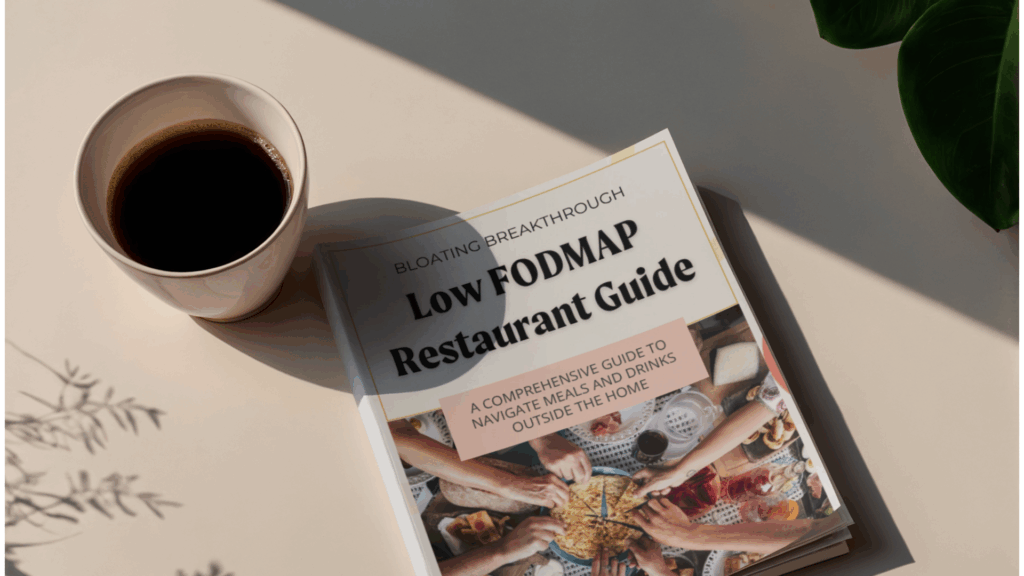
If eating out still feels overwhelming, I created a free Low FODMAP Restaurant Guide to help you feel more confident ordering at restaurants, including sushi spots. Inside, you will find practical tips, safe ordering ideas, and reassurance so meals away from home feel doable again.