Let’s talk about something that doesn’t get discussed nearly enough: bad breath (halitosis) and it’s relationship to gut health. If you’ve been dealing with halitosis and feel embarrassed, frustrated, or confused, you are not alone. Most people assume bad breath comes from garlic, coffee, or not brushing well enough. But when you’ve tried all the oral hygiene tricks and nothing seems to work, it may be time to look a little deeper.
As a gut health dietitian specializing in IBS and SIBO, I often remind clients that many symptoms can be related to an unhealthy gut. Bad breath is no exception and is more connected to gut health than most people realize.

What is Bad Breath?
Bad breath, also known as halitosis, occurs when odor-producing compounds build up in the body and are released through the mouth. While bad breath is often blamed on oral hygiene alone, in many cases, especially when breath issues are persistent, the source can extend beyond the mouth and into the digestive system.
From a gut health perspective, one of the biggest drivers of halitosis is the production of volatile sulfur compounds, often shortened to VSCs.
What Are Volatile Sulfur Compounds?
Volatile sulfur compounds are sulfur-containing gases produced when bacteria breaks down sulfur-rich foods and proteins. The most well-known VSCs include:

Join the Free Masterclass
Learn the real reason SIBO and IBS symptoms keep coming back, and what's actually missing from most protocols. No cost, no commitment.
Register Now- Hydrogen sulfide which smells like rotten eggs
- Methyl mercaptan which has a strong, foul odor
- Dimethyl sulfide which can smell sweet or cabbage-like
These compounds are “volatile,” meaning they easily vaporize and escape through the breath. While small amounts are normal, excessive production is often a sign that digestion or microbiome imbalances.
How Does the Gut Produce These Compounds?
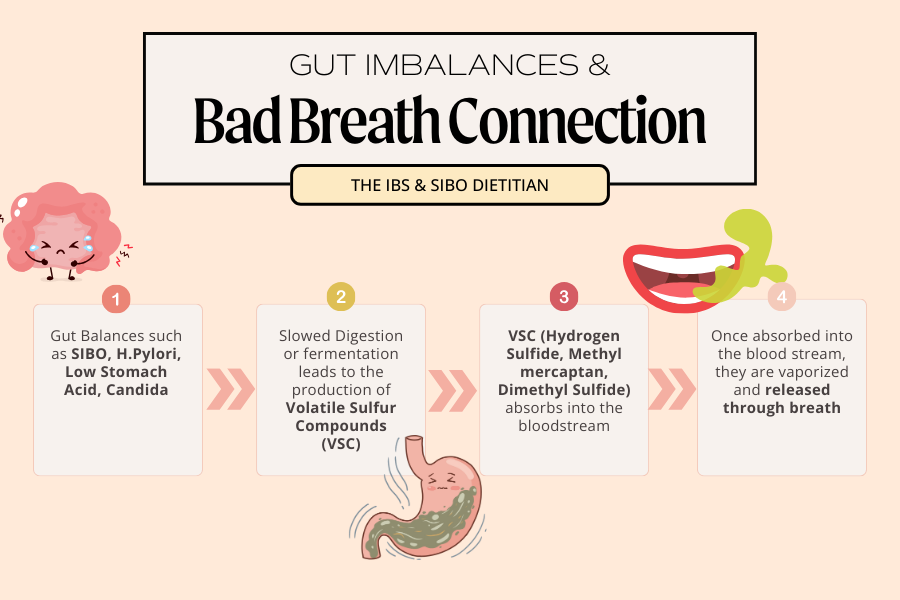
In a healthy gut, food is broken down and absorbed efficiently before bacteria and/or fungi has the chance to ferment it. When digestion slows or bacteria overgrows in the wrong place, more sulfur compounds are produced.
This can happen when:
- Food sits too long in your stomach or intestines
- Bacteria ferments protein and sulfur containing amino acids
- Gut motility is slowed
- Stomach acid is low or h pylori is present
- Bacterial or fungal overgrowth is present
Why Bad Breath Isn’t Always a Mouth Problem
Yes, bad breath can come from things like bacteria on the tongue, dry mouth, smoking, alcohol, or certain foods. Sinus issues and medical conditions can also play a role. But in my clinical experience, one commonly overlooked contributor is what’s happening inside the digestive system.
If digestion isn’t working efficiently, food can ferment, bacteria can overgrow, and gases can be produced that don’t just stay in the gut. These gases can travel upward and affect breath, especially when reflux or delayed digestion is present.
How Gut Health Can Influence Bad Breath
The mouth and the gut are both involved in the digestive system, and the health of one often reflects the health of the other. When the gut microbiome becomes imbalanced, a state known as dysbiosis, digestion slows, inflammation can increase, and symptoms may show up in unexpected ways, including bad breath.
I commonly see the following gut related patterns linked to halitosis.
SIBO
Small Intestinal Bacterial Overgrowth occurs when bacteria builds up in the small intestines rather than the large intestines where it belongs. This leads to fermentation which produces a gases such as Dimethyl sulfide (DMS) and/or hydrogen sulfide (H2S) which are absorbed in the blood stream and transported to the lungs and in turn in the breath as a foul, egg-smelling odor.
Low Stomach Acid or Impaired Digestion
Stomach acid plays an important role in breaking down food and neutralizing bacteria before it enters the small intestine. When acid levels are low, food may sit longer and feed on undigested carbohydrates and proteins. The byproduct of this travel upward and contribute to bad breath and reflux symptoms.
H. Pylori
H. pylori is an infection that resides in the stomach and the small intestines. H. pylori undergoes a putrefactive action where it releases an enzyme known as the urease enzyme. This enzyme elevates the pH of the stomach acid, which is leads to lowered digestion and suggested to cause elevated hydrogen sulfide levels and halitosis.
Candida or Yeast Overgrowth
Candida, more specifically Candida Albicans, can cause bad breath due to the production of Volatile sulfur compounds. A coated tongue, strong sugar cravings, and persistent bad breath can sometimes show up together here. The primary cause of bad breath in Candida infections is the high concentration of VSCs, specifically methyl mercaptan.

Signs Your Gut May Be Causing Bad Breath
If bad breath persists despite good oral hygiene and regular dental care, it may be worth considering the gut as a contributing factor. The digestive system plays a key role in how food is broken down and how gases are produced and released. When digestion is disrupted, it can sometimes show up as changes in breath.
Here are some signs to look out for:
- Bloating, gas, or reflux on a regular basis, especially when symptoms do not clearly correlate with specific foods or continue despite dietary changes.
- White or yellow coating on your tongue, which can reflect changes in oral or gut microbial balance and may be more noticeable in the morning or during periods of digestive discomfort.
- Sour, metallic, or sulfur like smelling breath, particularly when oral hygiene is consistent and dental causes have been ruled out.
- Dental checkups have not identified cavities, gum disease, or other oral explanations for persistent bad breath.
- You deal with constipation, diarrhea, or a mix of both, which can signal altered gut motility or fermentation patterns that contribute to gas and odor production.
- Uncomfortably full feeling after small meals, a sign that digestion or gastric emptying may be slower than optimal, allowing food to linger longer and ferment.
What Can Actually Help
When bad breath is gut related, targeting oral hygiene alone does not address what is driving the issue. It’s improving your symptoms at the root and optimizing digestion.
Here are a few foundational steps I often start with:
- Support Digestion – Start with simple habits like chewing thoroughly, eating without rushing, and sitting down for meals.
- Be Mindful With Fiber -Fiber can be incredibly helpful, but timing and type matter. For some people, adding fiber too quickly or adding the wrong type of can worsen symptoms. This is where individualized guidance becomes important.
- Consider Functional Testing – Stool testing or a SIBO breath test can provide clarity around what’s driving symptoms so you’re not guessing or trying random fixes.
- Low FODMAP Diet – A recent study tested the efficacy of using the low FODMAP diet as a solution to reduce secretion of volatile malodorous compounds SIBO-related halitosis.
Final Thoughts
Bad breath can feel like a surface-level issue, but it’s often a sign of a bigger issue. Your body is constantly giving you information. When you learn how to listen and respond with the right tools, symptoms often start to show improvement.
If you need help navigating this, you don’t have to do it alone. Supporting women through confusing, frustrating gut symptoms is exactly what I do, and there is a path forward that doesn’t involve fear or endless restriction. Check out the Bloating Breakthrough Coaching Program if you are ready to get started!