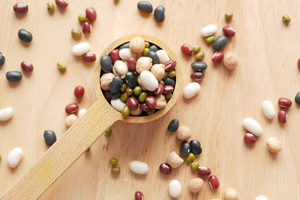
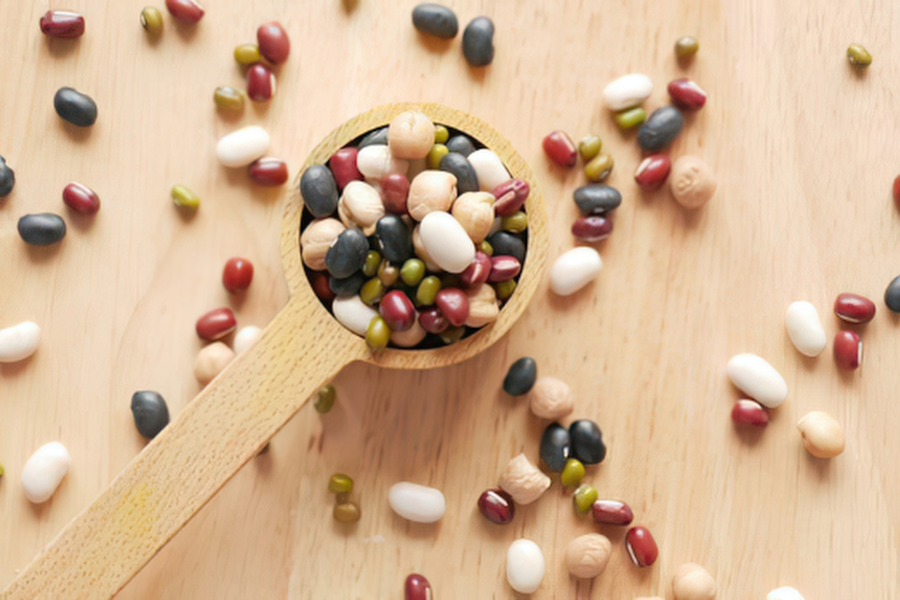
With the winter and soup season on the horizon, you may be wondering are beans low FODMAP? Beans are cheap, high in fiber, and loaded with plant protein and a perfect addition to a cozy meal. But for many of my clients with IBS or SIBO, one scoop of beans means hours of gas and bloating.
As a registered dietitian specializing in IBS and SIBO, I often get asked about beans and the low FODMAP diet. In this post, we will explain why beans ferment so easily. We will cover which beans are lowest in FODMAPs and how much to eat. You will also learn how canning, rinsing, and cooking change the tolerance. Finally, we will walk through low FODMAP swaps and a simple way to add beans back in.
What Makes Beans a FODMAP Concern?
FODMAP stands for fermentable oligosaccharides, disaccharides, monosaccharides, and polyols. These are short chain carbohydrates that pass through the small intestine largely undigested and ferment in the colon. Research has consistently shown that lowering total FODMAP intake reduces bloating, pain, and irregular bowel habits in most people with IBS (Halmos et al., Gastroenterology, 2014).
Oligosaccharides: Fructans and GOS
The oligosaccharide category, the O in FODMAP, splits into two subtypes: fructans and galactooligosaccharides, or GOS. Both are chains of sugar molecules your small intestine cannot break apart. As a result, they travel to the colon mostly intact (Gibson and Shepherd, Journal of Gastroenterology and Hepatology, 2010).
Common fructan sources include:

Join the Free Masterclass
Learn the real reason SIBO and IBS symptoms keep coming back, and what's actually missing from most protocols. No cost, no commitment.
Register Now- Wheat, rye, and barley
- Onion and garlic
- Asparagus and artichokes
- Some varieties of beans
Common GOS sources include:
- Beans, including chickpeas, kidney beans, and black beans
- Lentils and split peas
- Green peas
- Some nuts, including cashews and pistachios
Beans are best known for their GOS content, but many also contain fructans, so they do not fall neatly on one side of that split (Monash University FODMAP Blog, 2016). The exact mix varies from one bean to the next.
Benefits of Beans for IBS and SIBO
GOS is not inherently harmful, though. In smaller amounts, it acts as a prebiotic that feeds beneficial gut bacteria (Staudacher et al., Neurogastroenterology and Motility, 2021). That is part of why a low FODMAP diet is meant to be short term and structured, not a permanent restriction. Once you find your tolerated portion, beans offer real benefits:
- Feeds protective bacteria: GOS is especially good at feeding Bifidobacterium. In one trial, 11 grams a day more than doubled it (Schoemaker et al., Nutrients, 2022).
- Supports regularity: That same trial found GOS increased stool frequency in constipated adults.
- Works against methane buildup: Methane slows transit. Keeping things moving gives methane producing microbes less time to build up, which helps with IMO.
- Softens stool: Beans are rich in soluble fiber, which absorbs water and forms a gel that helps stool pass.
- Steadies blood sugar: Soluble fiber slows how quickly sugar enters the bloodstream after a meal (Viguiliouk et al., Advances in Nutrition, 2019).
- Lowers LDL cholesterol: Soluble fiber binds bile acids, so the liver pulls cholesterol from the blood to make more.
- Fuels the gut lining: Gut bacteria ferment soluble fiber into butyrate, which feeds the cells lining your colon.
How Canning, Soaking, and Cooking Change GOS
GOS dissolves in water. When beans are canned or boiled, some of it leaches into the liquid. Draining and rinsing then washes it away (Monash University FODMAP Blog, 2016). Even so, processing does not always bring beans under the low FODMAP GOS serving. One review found that soaking and cooking cut GOS by anywhere from about 10 to 80 percent. It also found that cooked pulses often still exceeded that FODMAP cutoff (Ispiryan et al., Comprehensive Reviews in Food Science and Food Safety, 2022). In other words, rinsing helps, but it does not replace measuring your portion.
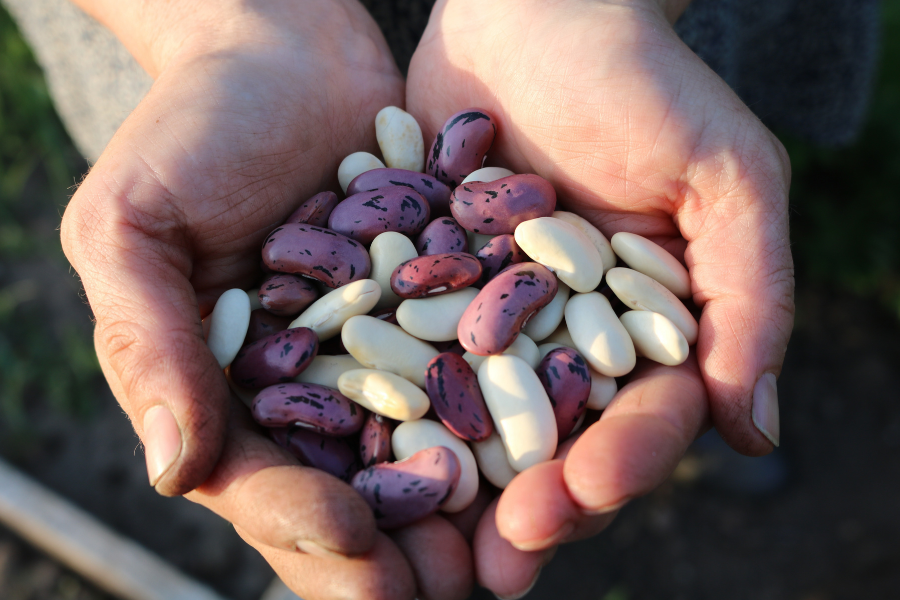
Are Beans Low FODMAP? Low and High Bean Types
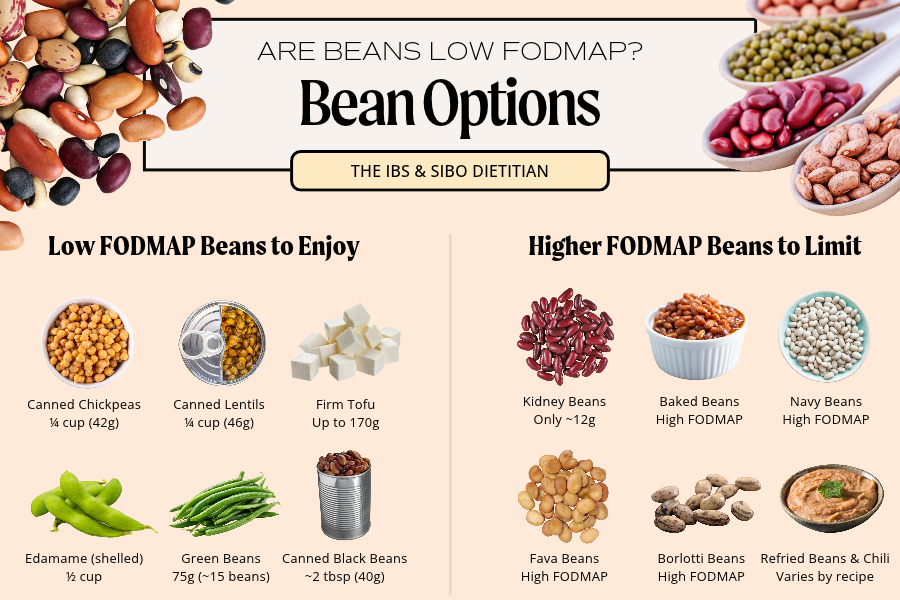
So are beans low FODMAP or not? The answer depends on which bean you choose, how it was prepared, and how much lands on your plate. These servings come from Monash University testing. Check the current Monash FODMAP app too, since Monash updates serving sizes as new testing comes in.
Lower FODMAP Beans to Enjoy
Canned Chickpeas (Drained and Rinsed)
Low FODMAP serving: About 1/4 cup, roughly 42 grams.
Canned chickpeas are the easiest bean to start with. Much of their GOS moves into the canning liquid, so a thorough rinse under running water makes a real difference. Measure your portion, since a quarter cup looks small on a plate and it is easy to scoop double.
Canned Lentils (Drained and Rinsed)
Low FODMAP serving: About 1/4 cup, roughly 46 grams.
Lentils follow the same pattern as chickpeas. They work well stirred into soups, salads, and grain bowls, where a small portion still adds texture and fiber. Canned is the simplest starting point, since the canning liquid has already pulled out part of the GOS.
Firm and Extra Firm Tofu
Low FODMAP serving: Up to about 170 grams. Silken tofu is much lower, at roughly two tablespoons.
Most people tolerate firm tofu well because much of the GOS ends up in the liquid pressed out during production. Silken tofu keeps more of that liquid, so its low FODMAP serving is far smaller. Tofu is a great high protein plant based alternative to meats. If a recipe calls for tofu, firm or extra firm is the safer choice.
Edamame (Shelled)
Low FODMAP serving: About 1/2 cup.
Edamame are young soybeans, picked before they mature. They allow a much more generous serving than whole mature soybeans. Choose shelled edamame and measure it rather than snacking straight from the bag. They are a great snack and option at a Sushi restaurant
Canned Butter Beans (Drained)
Low FODMAP serving: About 35 grams, or roughly two to three tablespoons.
Butter beans have a smaller window than chickpeas or lentils. Use them as a side or a topping rather than the base of the meal.
Canned Black Beans (Drained)
Low FODMAP serving: About 40 grams, or roughly two tablespoons.
Black beans are a great addition to tacos, soups, or salads. Although there is a Low FODMAP safe serving, it is very small, so it is best to be combined it rice or sprinkled on dishes like tacos or burrito bowls instead of the main dish.
Green Beans
Low FODMAP serving: About 75 grams, roughly 15 beans.
Green beans are a different food from dried beans and legumes. You are eating the young pod rather than the mature seed, so the FODMAP profile looks very different. They are a good choice when you want that bean texture without the same fermentation.
High FODMAP Beans to Limit
Kidney Beans
Low FODMAP serving: Only about 12 grams.
Kidney beans are one of the least forgiving beans on this list. A typical scoop in chili or a bean salad lands far above the low FODMAP serving. Limit these until you know your personal threshold.
Low FODMAP serving: High FODMAP at typical serving sizes.
These beans carry a heavy GOS load even after soaking, rinsing, and cooking. Baked beans start with navy beans and usually add sweeteners, and many brands also add onion or garlic. Save these for later in reintroduction, once you know how you respond to the more forgiving beans.
Refried Beans, Chili, and Bean Dips
Low FODMAP serving: Depends on the recipe. Most store bought versions are not low FODMAP.
Refried beans, chili, and dips often contain onion and garlic, which stack fructans on top of the GOS from the beans. Chili and mixed bean salads also combine several beans at once, so even small portions of each can add up. Homemade versions made with garlic infused oil and a measured portion of canned, rinsed beans are much easier to tolerate.
Bean Pastas, Chips, and Protein Bars
Low FODMAP serving: No single serving applies across brands. Tolerance depends on the specific product.
Many of these products use concentrated bean or chickpea flour, and serving sizes tend to run large. That combination lets the GOS add up quickly, even when the package looks like a single snack. Look for products with low FODMAP certification rather than assuming anything bean based is gut friendly.
Low FODMAP Swaps to Beans
If beans are not agreeing with you right now, or you are still working through reintroduction, these swaps keep similar protein, fiber, and texture without the same GOS load.
- Firm tofu or tempeh: Both work in stir fries, tacos, and grain bowls, and both allow a generous low FODMAP serving compared to most beans.
- Canned lentils in place of kidney beans: In chili or soup, a measured 1/4 cup of rinsed lentils per serving keeps the dish hearty with a larger low FODMAP window.
- Quinoa: Adds plant protein and fiber to salads and bowls where beans would usually go, and is low FODMAP at typical servings.
- Pumpkin seeds: Add crunch and plant protein to tacos or salads in place of black beans.
- Green beans: Keep the bean texture in a salad or side dish without the concentrated GOS of dried beans.
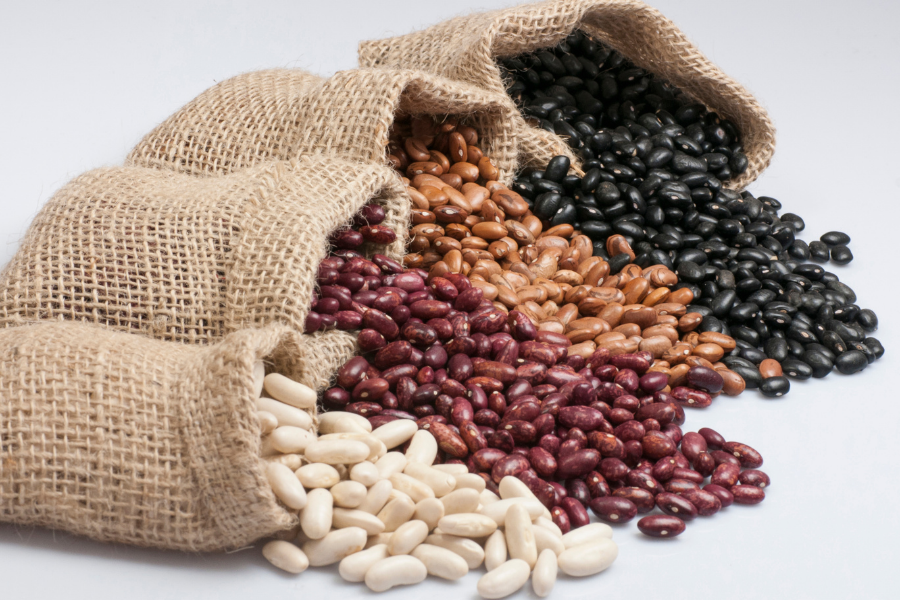
How to Add Beans Back In Without Triggering Symptoms
If you suspect beans have been part of your symptom pattern, this is the process I walk clients through.
- Start with one to two tablespoons of canned chickpeas or lentils, drained and rinsed well.
- Eat them as part of a full meal that includes protein and fat, rather than on their own.
- Track how you feel over the next one to two days. Gas from GOS can show up late.
- If you tolerate it, increase the amount slowly over several exposures. Work up to the low FODMAP serving size.
- Add one new bean at a time so you know which one is responsible.
- Aim for beans two to three times a week if you tolerate them. This is the frequency Monash suggests for the health benefits (Monash University FODMAP Blog, 2016).
- If small servings still cause symptoms, look upstream at gut motility, bacterial overgrowth, and nervous system regulation. The vagus nerve is a good place to start.
Ways to Lower the GOS Load Even Further
- Rinse canned beans: Drain and rinse thoroughly under running water every time.
- Discard the cooking water: When you cook dried beans, pour off the soaking and cooking water. Measure the cooked weight, not the dry weight.
- Keep beans a side, not the base: Build meals around low FODMAP vegetables and grains so beans stay a small part of the plate.
- Avoid stacking: Skip onion, garlic, and wheat in the same meal while you are still finding your threshold.
- Ask about enzyme support: I explain when I use it in my post on digestive enzymes for IBS.
Bottom Line
If beans cause symptoms, the goal is not to cut them out and move on. Beans are a dose dependent food, not a forbidden one. The GOS they contain is the same carbohydrate family found in peas and other legumes. Starting small, measuring your portion, and rinsing well gives most people a workable path back. If symptoms continue at small portions, the bean is probably not the whole story. Long term relief usually comes from looking at gut motility, bacterial overgrowth, and nervous system regulation. Removing food after food will not get you to the root cause.
Frequently Asked Questions
Are beans low FODMAP?
Some are, in small portions. Beans are rich in GOS, so most are high FODMAP at a full serving. Canned chickpeas and lentils, drained and rinsed, are the most forgiving. Firm tofu and edamame are also good options. Portion size is more important than the type of bean.
Which beans are lowest in FODMAPs?
Firm tofu and shelled edamame allow the largest servings. Among true beans, canned chickpeas and canned lentils are the easiest to tolerate at about 1/4 cup. Kidney beans and baked beans are among the highest. Always check the current Monash app for updated serving sizes.
Are canned beans lower in FODMAPs than dried beans?
Canning lets some GOS leach into the liquid. That means drained and rinsed canned beans are often better tolerated. Dried beans that are soaked, boiled, and drained lose GOS too. The amount removed varies widely, so measuring your portion is more important than the form.
Can I eat beans if I have SIBO?
Many people with SIBO tolerate small portions. Because fermentation happens higher in the gut with SIBO, beans can trigger symptoms faster. Start with one to two tablespoons of a canned, rinsed bean. Track your response before adding more. If beans keep causing trouble, it is worth looking at the SIBO itself rather than the bean.
Do enzyme supplements help with beans?
Some people find that enzyme supplements containing alpha galactosidase reduce bean related gas. Research in IBS is limited, so I treat this as a personal experiment rather than a guarantee. Talk with your dietitian before trying one. Enzymes work best alongside the strategies above, not instead of them.