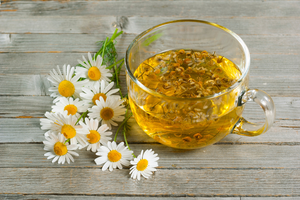
With all the herbal remedies out there, one thing I have been getting more questions about is chamomile tea good for GERD? Many of my clients deal with burning in their chest or a sour taste after meals. They are often told to just take an antacid and move on. But when we zoom out, there is usually a deeper connection. It often comes down to how the lower esophageal sphincter is functioning. Certain foods, drinks, and habits can make that dysfunction worse and some can actually help.
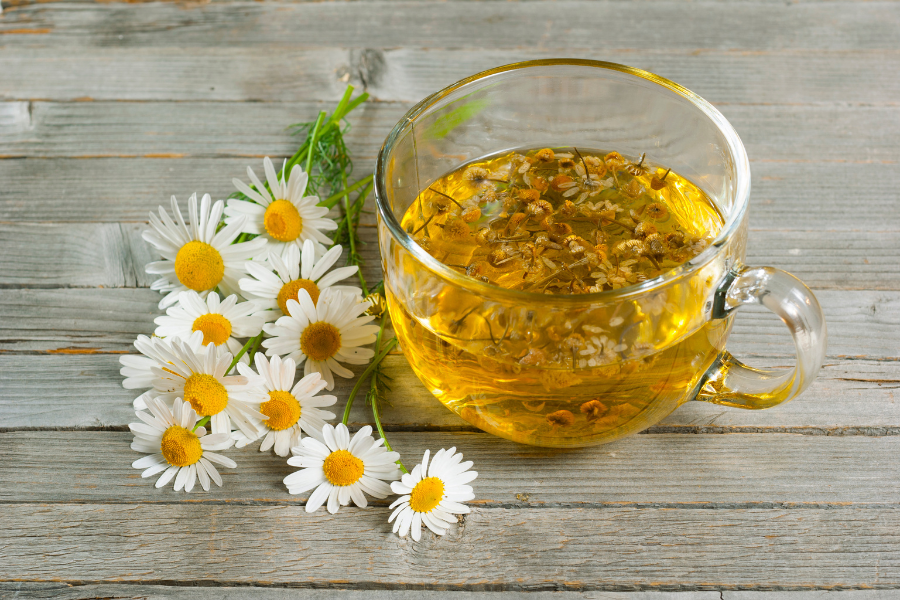
As a Registered Dietitian specializing in IBS and SIBO, I often get asked about chamomile tea for GERD and whether it truly helps. In this post, we will cover what is actually happening during reflux. We will also cover which teas are worth trying and which “soothing” drinks tend to backfire. Then we will build a realistic evening routine around this.
This post contains affiliate links. If you make a purchase through one of these links, I may earn a small commission at no additional cost to you. I only recommend products I have researched and would genuinely suggest to my own clients.
What Is Happening During Acid Reflux, Briefly
Reflux happens when the lower esophageal sphincter relaxes at the wrong time. This valve normally stays closed between meals, but it can open when it should not. This is called a transient lower esophageal sphincter relaxation, and it is considered the primary driver of GERD in most people (Zheng et al., International Journal of Biological Sciences, 2021). Diet and lifestyle do not make this valve malfunction on their own. However, they can make those relaxations more frequent, or make the resulting irritation worse (Herdiana, Nutrients, 2023). This is why the goal should not be to just mask the burning. It is worth understanding what is triggering the valve to misbehave in the first place.
Common causes of reflux include:
- A lower esophageal sphincter (LES) that relaxes at the wrong time: The LES is supposed to stay closed except when you swallow. Research has shown that transient LES relaxation is the most common mechanism behind reflux, occurring more often than a permanently weak sphincter (Zheng et al., International Journal of Biological Sciences, 2021).
- A hiatal hernia: When part of the stomach pushes up through the diaphragm, it pulls the LES out of position and weakens its ability to seal. Research has shown that hiatal hernia is one of the core anatomical contributors to reflux, alongside impaired esophageal clearance and crural diaphragm dysfunction (Zheng et al., International Journal of Biological Sciences, 2021).
- Delayed gastric emptying: When food sits in the stomach longer than it should, pressure builds until it overcomes the LES and pushes contents upward. Research has shown that this pressure buildup against the sphincter is a key driver of reflux, particularly after larger or higher-fat meals (Bertin et al., Digestion, 2026).
- Increased pressure in the abdomen: Pregnancy, excess weight around the midsection, and even tight waistbands can all raise intra-abdominal pressure enough to force the LES open.
- Low stomach acid in some cases: This is where things start to connect back to digestion itself. H. pylori infection is a common cause of reduced stomach acid, and research has shown that its relationship to reflux disease is complex and bidirectional, sometimes contributing to it and sometimes appearing protective depending on how the underlying gastritis pattern develops (McNamara & O’Morain, Gut, 1999). This makes low stomach acid a piece of the picture worth investigating for some people, not a confirmed universal driver of reflux.
- Impaired esophageal clearance: Weak or poorly coordinated esophageal muscle contractions mean acid that does reflux sits against the tissue longer instead of clearing quickly. Research has shown that esophageal motility abnormalities are one of the key pathophysiological contributors to GERD, alongside sphincter dysfunction and delayed gastric emptying (Bertin et al., Digestion, 2026).

Why Chamomile Specifically Gets Recommended
Chamomile contains apigenin and other compounds. These have shown antioxidant and anti-inflammatory activity on the gastric lining in research settings (Jabri et al., Pathophysiology, 2017).
This is one of the most overlooked pieces of the reflux conversation. A lot of irritation from reflux is not only about how much acid is present. It is also about how inflamed and reactive the tissue already is. Chamomile is also naturally caffeine free and mild. That is important to note because caffeine itself can relax the lower esophageal sphincter. None of this means chamomile is a cure. It means chamomile is a low-risk, evidence-informed option worth trying. It is worth pairing with the deeper work of understanding why your valve is under pressure in the first place.
Chamomile Teas Worth Reaching For
- Traditional Medicinals Organic Chamomile: a single-ingredient, organic tea that is widely available. It is tested for quality, making it a reliable everyday option.
- Traditional Medicinals Chamomile with Lavender: adds lavender for a calming evening ritual. This is useful if stress and a wound-up nervous system are part of your pattern.
- U.S. Wellness Naturals Organic Chamomile Flowers: a loose-leaf, single-ingredient option. It suits anyone who prefers steeping whole flowers over a bagged tea.
- Taylors of Harrogate Pure Chamomile: a mild, caffeine-free tea with a gentle flavor. It is easy to tolerate, even for people sensitive to strong herbal tastes.
When Is Chamomile Not Appropriate with GERD?
Chamomile tea is often recommended as a gentle option for reflux, but it is not the right fit for everyone. This is especially true for anyone whose GERD symptoms overlap with IBS.
Despite its calming reputation, chamomile tea is classified as high FODMAP. According to FODMAP testing, a standard cup of brewed chamomile contains roughly 0.8 grams of fructans and GOS, well above the 0.5 gram threshold Monash University uses to classify a serving as low FODMAP. Fructans and GOS ferment quickly in the gut, and that fermentation process can increase abdominal pressure, which is exactly the kind of mechanism that worsens reflux rather than calming it.
GERD and IBS coexist far more often than most people realize. Research has shown that up to 79% of people with IBS report reflux symptoms, and up to 71% of people with GERD report IBS symptoms as well (Dickman, Feroze, and Fass), Current Gastroenterology Reports, 2006, which points to a shared underlying dysfunction rather than two unrelated problems happening at the same time. When IBS is part of what is driving someone’s GERD, adding a high FODMAP tea on top of that can work against the root cause instead of supporting it.
Chamomile may not be the right choice for you if:
- You already know you are FODMAP sensitive: If certain fruits, garlic, onion, or wheat reliably trigger your gut, chamomile’s fructan content is likely to do the same thing.
- Your reflux flares alongside bloating, gas, or irregular bowel habits: This pattern often points to an IBS component sitting underneath the reflux, not just an isolated esophageal issue.
- You have already been diagnosed with IBS or SIBO: In this case, chamomile’s FODMAP load works against the root cause you are actually trying to address.
How to Actually Use Chamomile Tea for Reflux
- Steep one tea bag, or one to two teaspoons of loose chamomile, in hot water for 8 to 10 minutes. This fully extracts the anti-inflammatory compounds.
- Drink it 30 to 60 minutes after your evening meal rather than right after eating, since lying down soon after any liquid can worsen reflux.
- Sip slowly instead of drinking a large volume quickly, since a large volume of any liquid can raise gastric pressure.
- Skip the lemon or mint leaf garnish, since both can undo the calming effect you are going for.
- Pair it with an earlier dinner and staying upright for two to three hours afterward. Chamomile is a support, not a replacement for basic reflux hygiene.

Final Thoughts
If you are dealing with reflux, the goal should not be to find that one hack and be done. This is where conventional approaches often fall short. They tend to treat GERD as a single problem with a single fix, rather than a downstream symptom. In many cases, reflux connects back to slower motility, chronic stress, and a wound-up nervous system. It can also connect to eating patterns that keep the vagus nerve from signaling digestion to slow down and finish its job. Chamomile tea can be one small, supportive piece of that bigger picture. Long-term relief tends to come from meal timing, portion size, and addressing what is keeping that valve under pressure, not from any single drink.
Frequently Asked Questions
Does chamomile tea actually reduce acid reflux symptoms?
Chamomile has anti-inflammatory and antioxidant properties that appear to support gastric tissue in research settings. It is also naturally caffeine free, which matters because caffeine can relax the lower esophageal sphincter. That said, direct clinical trials on chamomile tea specifically for diagnosed GERD are still limited. Most of the current evidence comes from broader gastric research rather than reflux-specific human trials. It is best viewed as a gentle, low-risk addition rather than a stand-alone treatment.
Is chamomile tea safe to drink every night for reflux?
For most people, chamomile tea is considered safe for regular use. It does not carry the same risks as long-term antacid or acid-suppressing medication use. However, anyone with a ragweed allergy should be cautious, since chamomile is part of the same plant family and can trigger a reaction. Also if you are sensitive to fructans, it may lead to symptoms such as bloating or gas.
Why does peppermint tea make reflux worse if it is also considered a digestive herb?
Peppermint is genuinely helpful for some digestive complaints, like bloating and cramping further down the digestive tract, because it relaxes smooth muscle. The problem for reflux specifically is that this same relaxing effect extends to the lower esophageal sphincter, the valve that is supposed to stay closed between meals. When that valve relaxes at the wrong time, stomach contents can move upward. That is the opposite of what someone with reflux actually needs.
What is actually causing my reflux if diet changes are not fully fixing it?
If diet and lifestyle changes only get you partway there, it is worth looking upstream. Motility, stomach acid levels, stress and nervous system regulation, or structural issues like a hiatal hernia can all be involved. Reflux is often a downstream symptom rather than a standalone problem. Treating only the burning sensation, without addressing what is causing the valve to malfunction, tends to lead to symptoms returning. Working with a practitioner who looks at the full digestive picture, not just the symptom, usually gets better long-term results.