If you’re living with Irritable Bowel Syndrome (IBS), chances are you’ve had moments of hesitation before ordering a glass of wine or enjoying a cocktail. Maybe you’ve noticed that alcohol seems to trigger bloating, urgency, or that familiar next-day digestive “hangover.” So, can you still enjoy alcohol with IBS? Or is it best to avoid it completely?
As a Registered Dietitian Specializing in IBS & SIBO, I help clients find a balance between supporting their digestion and living their lives, and yes, that sometimes includes the occasional drink! Let’s dive into the relationship between IBS and alcohol, and how to make more informed (and less triggering) choices.

How Does Alcohol Affect IBS?
Alcohol impacts digestion in everyone, but if you’re living with IBS, those effects tend to be more pronounced and more disruptive. Those with a sensitive gut can feel heightened effects of alcohol, which is why even small amounts can trigger noticeable symptoms.
Here’s what’s happening in the gut when IBS and alcohol intersect:

Join the Free Masterclass
Learn the real reason SIBO and IBS symptoms keep coming back, and what's actually missing from most protocols. No cost, no commitment.
Register Now- Increased gut motility
Alcohol stimulates intestinal movement. For those with IBS (especially those with IBS-D) this can speed things up too much, leading to loose stools, urgency, or incomplete digestion. When food moves through the gut too quickly, nutrients aren’t absorbed properly, which can worsen symptoms over time. (1)
- Disruption of gut bacteria
Alcohol alters the balance of the gut microbiome by lowering beneficial bacteria strains. This imbalance can increase gas production, bloating, and further dysbiosis, something many people with IBS and SIBO are already dealing with.
- Irritation of the gut lining
Alcohol is a known irritant to the intestinal lining. If you already have low-grade inflammation or increased intestinal permeability (“leaky gut”), alcohol can further weaken that barrier, allowing particles to pass through more easily and triggering immune responses that worsen symptoms and food sensitivities. (2)
- Relaxation of the lower esophageal sphincter (LES)
Alcohol relaxes the muscle that keeps stomach acid where it belongs. This makes reflux and heartburn more likely, particularly in people who already struggle with GERD or upper GI symptoms alongside IBS.
- Reduced digestive enzymes and stomach acid over time
Regular alcohol intake can suppress stomach acid and pancreatic enzyme output. This slows digestion, increases fermentation in the gut, and can lead to bloating, gas, and feelings of heaviness after meals, especially when paired with larger or higher protein and fat containing meals. (3)
- Increased workload on the liver
Alcohol places additional stress on the liver, which plays a major role in detoxification, bile production, and hormone metabolism. When the liver is overburdened, bile flow can slow, digestion of fats may be impaired, and overall gut function can suffer, contributing to bloating and discomfort. (2)

Common IBS Symptoms After Alcohol
If you’ve experienced any of the following after drinking, alcohol might be playing a role in your flare-ups:
- Bloating or distension
- Gas or cramping
- Loose stools or urgent bathroom trips the next morning
- Acid reflux or heartburn
- Fatigue or brain fog (often from poor sleep + gut inflammation)
It is important to note that everyone’s sensitivity to alcohol is different. Some people tolerate a glass of wine just fine, while others feel it after one sip. In some cases, alcohol doesn’t make a noticeable impact on the gut.
Gut-Friendly Alcohol Options for IBS
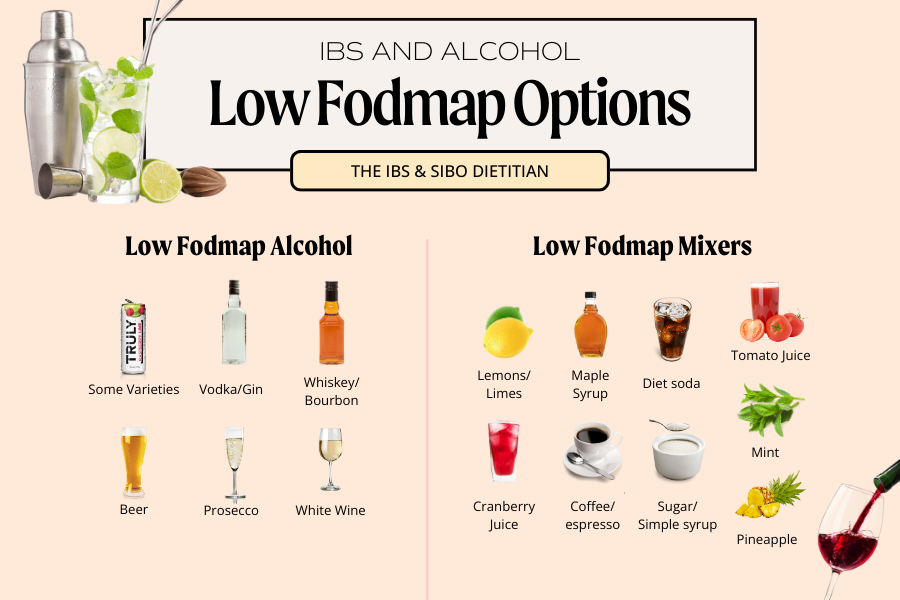
If you have a history of not tolerating alcohol or you may be currently dealing with an IBS flare, and want to enjoy a drink on occasion, these options tend to be lower in FODMAPs and easier to tolerate:
1. Dry Wines
- Dry white wine: Sauvignon Blanc, Pinot Grigio
- Dry red wine: Cabernet Sauvignon, Merlot
Choose wines that are less sweet. Stick to 1 glass and hydrate well.
2. Distilled Spirits
- Vodka (potato or grain-based)
- Gin
- Whiskey
- Tequila (100% agave)
Best served with low-FODMAP mixers like club soda, lime, or infused water. Skip tonic water (it contains high-FODMAP sweeteners).
3. Low-FODMAP Beer (in moderation)
While beer contains gluten, it is actually low in fodmaps, making it a good option unless gluten is a trigger or you have Celiac Disease. It is also important to be aware of carbonation, however. Whether it is beer or other carbonated beverages, the carbonation could lead to increased bloating and gas.
Alcoholic Drinks That May Trigger IBS Symptoms
These tend to be higher in FODMAPs or gut irritants:
- Sweet wines like Moscato, dessert wines, or wine coolers
- Mixed drinks made with juice, soda, or syrups
- Hard cider (often high in fructose and sorbitol)
- Beer for those sensitive to gluten or carbonation
- Flavored hard seltzers with added polyols or artificial sweeteners
Tips for Drinking Alcohol with IBS
If you’re going to indulge, try these tips to minimize flare-ups:
- Eat beforehand. Drinking on an empty stomach can lead to more inflammation and irritation to the gut lining.
- Limit to one drink. More than that can significantly increase symptoms and low FODMAP recommendations are for one drink.
- Avoid high-FODMAP mixers. Use lemon, lime, cranberry juice, cucumber, or mint instead.
- Hydrate! Drink a glass of water between each alcoholic drink.
- Know your timing. Drinking during a flare or while on a restrictive diet phase (like Low FODMAP elimination) may be best avoided.
- Track your symptoms. Keep a journal to see how your body responds to different types of alcohol.
Do You Have to Avoid Alcohol Altogether?
Not necessarily. While alcohol isn’t beneficial for gut health, occasional mindful drinking can be part of a balanced lifestyle. The key is approaching IBS and alcohol intentionally, understanding your own tolerance, knowing which drinks are less likely to trigger symptoms, and supporting your body before and after you drink.
That said, if you’re actively dealing with:
- Ongoing flare-ups
- SIBO (especially during the treatment phase) or dysbiosis
- Intestinal permeability (leaky gut)
- Inflammation
…it may be best to hold off on alcohol while your gut is healing.
Download: Lower-Bloat, IBS-Friendly Mocktails

If alcohol consistently triggers your IBS symptoms, mocktails can be a game-changer, especially during the holidays, social gatherings, or while your gut is healing. You don’t have to sip plain water while everyone else enjoys a festive drink.
Download the FREE Lower FODMAP Holiday Mocktails guide to give you flavorful, satisfying drink options that won’t leave you bloated, uncomfortable, or regretting it the next day.
Inside the guide, you’ll find low FODMAP, gut-friendly mocktail recipes, including:
- Vegan Coquito – a creamy, dairy-free holiday classic made with coconut and warming spices
- Cranberry Orange Mocktail – bright, festive, and refreshing without high-FODMAP sweeteners
- Pomegranate Spritz – light, bubbly, and perfect for sipping at gatherings
- Blood Orange Mule – a mocktail twist on a favorite, with ginger for digestive support
- Warm Citrus, Maple & Ginger Tonic – cozy, soothing, and ideal for cold nights or reflux-prone guts
Each recipe is designed to be:
- Low FODMAP
- Gentle on digestion
- Free from artificial sweeteners and syrups
- Easy to make at home with simple ingredients
These are the types of drinks I recommend to clients who want to feel included socially without sacrificing their gut health.

Final Thoughts: IBS and Alcohol
Alcohol doesn’t have to be completely off-limits when living with IBS. With the right options, timing, and strategies, many people can enjoy a drink without feeling miserable the next day. It comes down to making empowered decisions, understanding your body, recognizing your personal triggers, and supporting your gut before and after drinking.
And on the days when alcohol just doesn’t feel worth the risk, mocktails are a powerful (and often overlooked) option. Choosing gut-friendly, low FODMAP mocktails allows you to stay social and enjoy the moment without sacrificing how you feel later. For many of my clients, rotating mocktails in during flares, while healing the gut, or simply when they want to feel their best has been a game-changer. At the end of the day, managing IBS and alcohol isn’t about restriction, it’s about balance, awareness, and listening to your body so you can live your life with more confidence and fewer symptoms.